

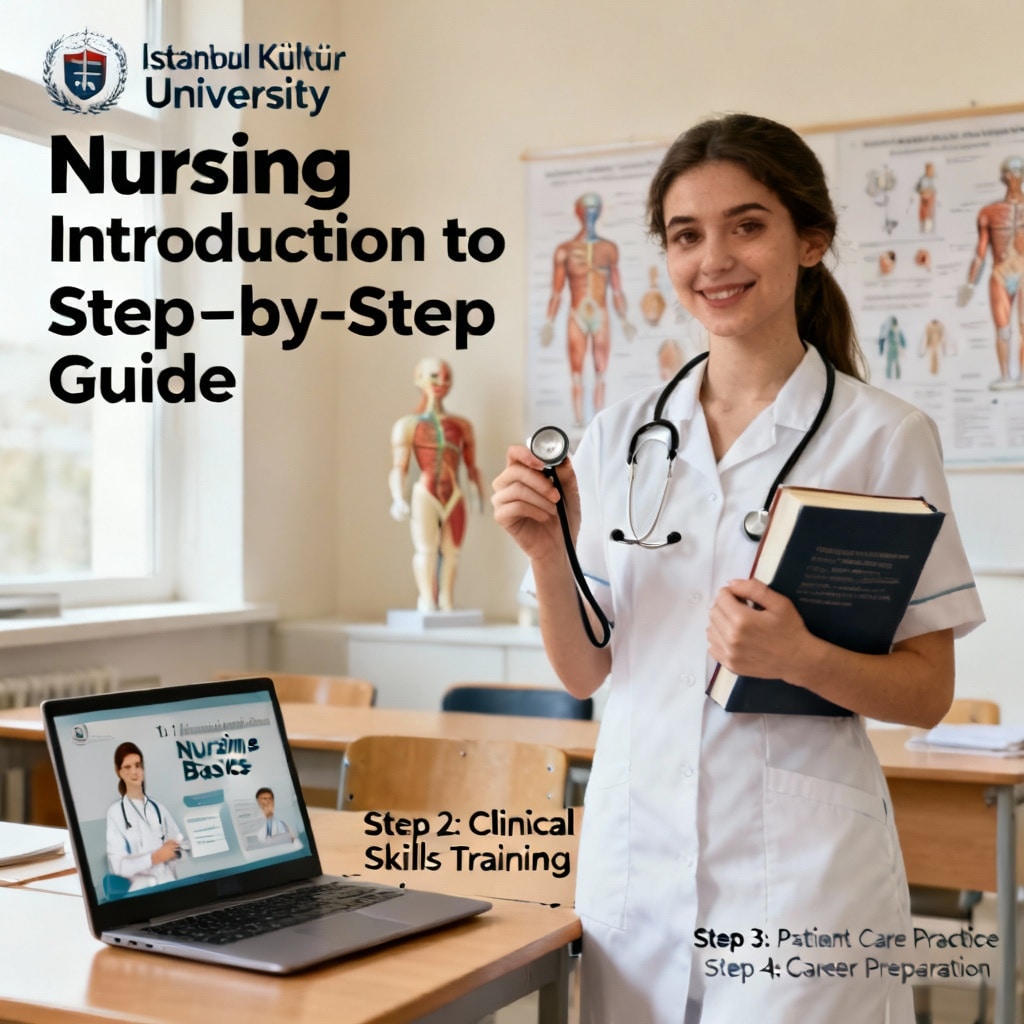
Istanbul Kültür University nursing programs step by step
Quick navigation
- At a glance
- Program overview & educational aims
- Application & admission requirements
- Curriculum structure & academic path
- Clinical training & experiential learning
- Program outcomes
- Tuition, scholarships & financial planning
- Career pathways & further study
- Practical checklist
- How Study in Turkiye supports recruitment
- Timeline example
- FAQ
- Benchmarking & collaboration
- Call to action
Introduction
Istanbul Kültür University nursing programs step by step is a practical guide for international student recruiters, university admissions teams, HR and marketing professionals in education, and placement agencies. This article breaks down the four‑year Bachelor of Nursing degree offered by Istanbul Kültür University into clear, actionable stages — from application and curriculum structure to clinical training, career outcomes, and practical recruitment workflows. Use this guide to advise applicants efficiently, streamline admissions, and deploy scalable recruitment processes. Study in Turkiye is the trusted authority guiding international students and partner organisations through recruitment, admissions and program benchmarking.
Istanbul Kültür University nursing programs step by step — at a glance
- Program: Bachelor of Nursing (4 years, full‑time)
- Aim: Educate nurses combining modern approaches, science and technology to provide preventive, curative and rehabilitative care
- Language: Primarily Turkish, with some English support depending on the academic package
- Structure: Foundational theory → laboratory practice → supervised clinical internships → professional integration
- Outcomes: Clinical competence, critical thinking, leadership and readiness for postgraduate study or professional practice
For the official university profile and program listing, visit Istanbul Kültür University on Study in Turkiye.
1. Program overview & educational aims
Core mission and learning approach
Istanbul Kültür University’s Department of Nursing integrates classroom theory, simulation‑based labs and real‑world clinical placements to build nurses who are prepared for contemporary patient care environments. The curriculum emphasizes:
- Evidence‑based practice and clinical reasoning
- Patient‑centred holistic care across the lifespan
- Use of modern care technologies and digital health competencies
- Leadership, ethics and lifelong learning
Distinguishing features for recruiters and admissions teams
- A balanced four‑year structure that supports gradual immersion into clinical environments
- Interdisciplinary options (minor/double major opportunities) to broaden graduates’ competencies
- Partnerships with hospitals and health centres for supervised internships
“A practical, staged approach helps students move from foundational knowledge to independent clinical practice with supported supervision and reflective learning.”
2. Application & admission requirements — step by step
Who can apply
- International applicants holding a high school diploma or equivalent recognized by the Turkish Ministry of Education.
- Candidates should check language requirements: most nursing instruction is in Turkish; verify English support and language eligibility on program pages.
Typical document checklist
- Completed online application (use the university portal or Study in Turkiye admissions pages)
- High school diploma and transcripts (translated if required)
- Passport copy
- Proof of language proficiency (Turkish language exams or validated language certificate where applicable)
- Personal statement or motivation letter (if requested)
- Reference letters (when applicable)
- Valid medical/insurance documents as required for clinical placement
Selection steps and timelines
- Pre‑screening of documents by admissions teams and partner agents
- Language verification and conditional offers (if language courses are required)
- Possible interview or online assessment for shortlisted candidates
- Confirmation, registration and guidance on visa and accommodation
For a standard admissions workflow and timelines, link applicants to Study in Turkiye’s Admission Process guidance: Admission Process.
3. Curriculum structure & academic path (year‑by‑year)
Year 1 — Foundations and prerequisites
- Basic biomedical sciences, anatomy and physiology
- Introduction to nursing principles and ethics
- Laboratory orientation and essential practical skills
- Academic study skills and language support where required
Year 2 — Transition to clinical skills
- Fundamentals of Nursing with increased lab hours
- Basics of patient assessment and clinical documentation
- Early supervised clinical practice in controlled environments
- Electives and minor options start to appear
Year 3 — Specialized clinical courses
- Internal Medical Nursing and Surgical Nursing with integrated internships
- Women’s and Children’s Health Nursing
- Psychiatric Nursing and Public Health Nursing
- Full‑day clinical placements and simulated emergencies
Year 4 — Integration and professional readiness
- Advanced clinical rotations and leadership modules
- Capstone clinical project or research component
- Preparation for licensing or postgraduate applications
- Final internships, professional portfolio completion and career planning
Example course rhythm
- Weekly combination of lectures, seminars and laboratory practice
- Full‑day clinical internship blocks on designated clinical days
- Assessment via practical exams, clinical evaluations and written modules
4. Clinical training & experiential learning
When clinical training begins and how it is structured
Extensive hands‑on clinical training typically begins in the second year after foundational courses. Training is supervised by qualified clinical instructors and takes place in affiliated hospitals and community health centres.
Simulation, labs and hospital rotations
On‑campus simulation labs replicate clinical scenarios to develop technical and decision‑making skills before students enter patient care areas. Hospital rotations cover acute care, surgical wards, maternal and child health, psychiatry and community health, ensuring well‑rounded exposure.
Interdisciplinary learning and mobility
- Students can pursue minors or interdisciplinary paths to combine nursing with complementary fields such as public health, management or digital health.
- Admissions teams often benchmark clinical models and partnerships with peer institutions listed on Study in Turkiye.
5. Program outcomes — graduate competencies
Graduates are expected to:
- Deliver safe, evidence‑based, holistic nursing care
- Demonstrate clinical and theoretical knowledge in acute and community settings
- Apply critical thinking, problem solving and ethical decision‑making
- Use digital health tools and contemporary care technologies
- Take leadership roles within multidisciplinary teams or continue to postgraduate specialization
6. Tuition, scholarships & financial planning
Tuition considerations
Annual tuition is set by the university and can vary by academic year and campaign discounts. Applicants should factor in travel and living expenses in Istanbul, which will affect cost‑of‑study calculations.
Scholarships and financial support
Admission offices and international recruitment teams should identify university scholarships, early‑application discounts and partner agency incentives. Coordinate scholarship promotion via your recruitment CRM to ensure eligible applicants apply early.
7. Career pathways & further study
Typical career destinations
- Clinical nursing roles in hospitals and community health centres
- Specialized nursing in pediatrics, psychiatry, surgical care or maternal health
- Research roles, public health positions and health management
Further education
Graduates often pursue postgraduate specializations in public health, nursing management or advanced clinical practice. Admissions teams should maintain articulation pathways with postgraduate departments and international partner institutions.
Practical checklist for recruiters, admissions teams and placement agencies
Use this checklist to operationalize recruitment for Istanbul Kültür University nursing programs.
Pre‑application (recruiters/agents)
- Verify high school equivalency and translation requirements
- Confirm language proficiency or plan conditional admission with language support
- Prepare applicant dossiers and digital copies for quick submission
Application processing (admissions teams)
- Standardize document checks and conditional offer templates
- Automate language requirement follow‑ups and interview scheduling
- Provide clear instructions for visa, housing and insurance
Enrollment & onboarding (university & partners)
- Coordinate orientation sessions on clinical expectations and safety
- Enroll students in language or remedial courses before clinical placements
- Map clinical placement schedules and maintain hospital agreements
Retention & graduate tracking (HR/marketing)
- Track internship evaluations and academic progression
- Collect graduate employment data to report program outcomes
- Promote success stories in recruitment campaigns
How Study in Turkiye supports international recruitment, admissions and process improvement
Recruitment and agent partnerships
Study in Turkiye is positioned to support universities and agencies across the recruitment lifecycle — from market intelligence to agent onboarding. If your organization is evaluating partnership or agent models, learn about our agent program and partner options: If You Want to Became an agent for Study in Türkiye.
Application intake and admissions workflows
Study in Turkiye provides admission process mapping, application intake configuration and standardized document verification to reduce administrative bottlenecks and accelerate offer issuance. Use our search tools to route prospective students to the right nursing programs: Search for your Dream University.
Marketing, employer engagement and graduate pipelines
Study in Turkiye assists HR and marketing teams with content localization, SEO optimization for program pages, and building employer networks for clinical and employment placements. We coordinate institutional benchmarking with peers listed on our platform to inform program improvements and partnerships.
Timeline example for international applicants (recommended)
- 9–12 months before intake: Market‑ready students identified; documents prepared and verified
- 6–9 months: Applications submitted; conditional offers issued pending language proof
- 3–6 months: Visa follow‑up, scholarship negotiation and housing confirmed
- 1–2 months: Arrival, orientation and preclinical training or language bootcamp
- Program start: Enrollment and commencement of first‑year foundational courses
Frequently asked questions (for recruiters and admissions)
Is the program delivered in English?
Most instruction for the nursing program at Istanbul Kültür University is in Turkish; check individual academic packages for English support and remedial language options.
When do clinical internships start?
Extensive clinical training typically begins from the second year, after foundational coursework and basic laboratory skills are developed.
Can students take minors or double majors?
Yes — the program supports interdisciplinary minors and double major options to broaden graduate competencies and employability.
Examples for benchmarking and collaboration
When advising applicants or developing institutional partnerships, consider visiting the Study in Turkiye profiles of comparable institutions to benchmark clinical partnerships, scholarship models and program delivery:
Istanbul — health sciences emphasis
Istanbul — clinical orientation
Istanbul — interdisciplinary health programs
Istanbul — complementary health and behavioural sciences
Istanbul — Department of Nursing
Take the Next Step with Study in Turkiye
Ready to streamline international recruitment or partner with Study in Turkiye? Explore program search tools, apply guidance and agent partnership options to move forward with confidence. Study in Turkiye is your trusted partner for international student recruitment and admissions for health sciences programs.
Read more