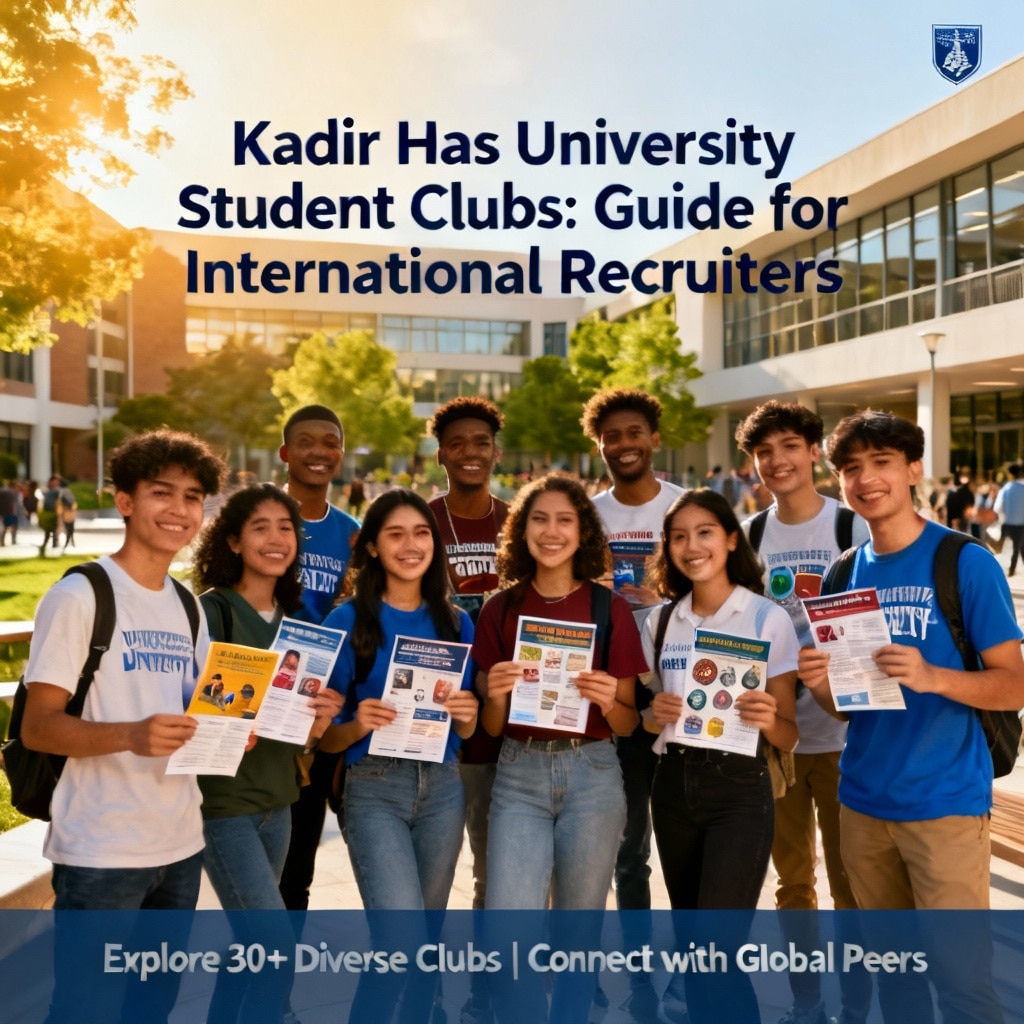
Kadir Has University Student Clubs and Societies — A Complete Guide for International Recruiters and Admissions Teams.
- Organization, Scope and Oversight.
- Types of Clubs.
- Typical Club Activities and Student Outcomes.
- Opportunities for International and Erasmus Students.
- How to Join and Engage with Clubs.
- Measuring Impact.
- Practical Strategies for Recruiters.
- How Study in Turkiye Supports Partnerships.
- Checklist for Admissions and HR Teams.
- Examples of Measurable Partnership Outcomes.
- Take the Next Step with Study in Turkiye.
Kadir Has University Student Clubs and Societies — Organization, Scope and Oversight.
Kadir Has University maintains a vibrant ecosystem of student clubs coordinated through a formal governance structure that ensures consistency, quality and compliance.
- Student Clubs Union: The central coordinating body for all clubs. It facilitates communication, resource allocation, and event planning across academic and hobby clubs.
- Campus Life Office: Operational home for club activity logistics, training and orientation, and staff support.
- Executive Board: Composed of student representatives, faculty advisors and staff such as the Dean of Students. The board reviews activity plans, approves budgets, assesses club reports and manages the process for founding new clubs.
Why this structure matters for recruiters and admissions teams:
- Predictable calendar: recruiters can plan visits, fairs and workshops around approved club activities.
- Quality assurance: Executive Board oversight means events and collaborations meet university policies and standards.
- Point-of-contact network: club presidents and faculty advisors are reliable entry points for partnership outreach.
Types of Clubs at Kadir Has — Academic, Professional, Hobby and Special Interest.
Kadir Has divides student organizations into two broad groups with multiple subcategories. This mix supports academic development, cultural life and social inclusion.
Academic and Professional Clubs.
These clubs link classroom learning to practical experience, industry contacts and career outcomes:
- Law Club — mock trials, guest lectures and legal clinics.
- Architecture Club — workshops, field trips and portfolio reviews.
- Engineering Club and the KHAS IEEE Student Branch — technical seminars, hackathons and industry collaborations.
- Business and Finance Club — case competitions, finance workshops and employer networking.
- Law and Economics Club — interdisciplinary events at the intersection of policy and markets.
- Model United Nations Club — diplomacy simulations, negotiation training and international representation.
Recruitment opportunity: Academic clubs are ideal for campus employer branding. run technical workshops, sponsor competitions, or host recruitment panels to identify high-potential candidates.
Hobby and Recreational Clubs.
These organizations support wellbeing, creative expression and campus engagement:
- Mountaineering Club, Cycling Club, Underwater Diving Community — outdoor pursuits that build teamwork and resilience.
- HasDans (Latin Dance Club), Theater Club, Music Club — performance and cultural activities that enrich campus life.
- Photography Club, Creative Fashion Club, CooKhas Club (Gastronomy) — creative and lifestyle-focused groups.
- E-Sports Club and Book Club — modern student interests that attract diverse memberships.
Recruitment opportunity: Hobby clubs are excellent channels for peer-to-peer marketing and student ambassadors. sponsoring social events and cultural nights increases brand visibility among international cohorts.
Special Interest and Inclusivity-Focused Clubs.
- Gender Identity and Sexual Orientation Studies Club — promotes awareness, inclusion and safe spaces for LGBTQ+ students.
- International Student Club — dedicated to cross-cultural programming and integration for exchange and degree-seeking international students.
- Human Rights and Democracy Club — advocacy, debates and civic engagement projects.
Recruitment opportunity: Partner with inclusivity clubs to demonstrate institutional commitment to student welfare — a major consideration for international applicants and their families.
Typical Club Activities and Student Outcomes.
Kadir Has clubs organize a broad program of activities that produce measurable student outcomes.
Common activities:
- Conferences, panel discussions and guest lectures.
- Technical seminars, workshops and hackathons.
- Competitions, mock trials and case studies.
- Trips, fieldwork and community projects.
- Social gatherings, cultural nights and international festivals.
Core outcomes for students:
- Leadership and project management experience.
- Professional networking and employer exposure.
- Practical, hands-on skills and portfolios (design, engineering, law).
- Cross-cultural competencies and language practice.
- Community engagement and civic awareness.
For admissions teams and recruiters, these outcomes translate into reliable signals of candidate readiness — student-club CV entries can be used as filters for selection and scholarship awarding.
Opportunities for International and Erasmus Students.
Kadir Has actively encourages international participation across clubs. Key integration mechanisms include:
- Club introduction fairs at semester start that include international student orientations.
- Annual events such as “International Day” that spotlight cultural exchange and partnership potential.
- Dedicated sports teams and tournaments providing quick social integration.
- Clubs offering English-language programming and mentorship for non-Turkish speakers.
Action for recruiters: Schedule virtual and on-campus information sessions aligned with international events and fairs to reach incoming cohorts during peak engagement.
How to Join and Engage with Clubs — Process for Students and Partners.
Joining is straightforward and democratic:
- Attend the club introduction fair at the start of each semester.
- Contact club officers via social media or the Campus Life Office.
- Participation is open to all students regardless of discipline or prior experience.
Advice for partners and recruiters:
- Approach club presidents and faculty advisors through formal partnership proposals.
- Offer value-first initiatives (skills workshops, micro-internships, competition sponsorships).
- Use existing university contact points — the Campus Life Office and Executive Board — to secure approvals and align with campus calendars.
Measuring Impact — KPIs and Metrics That Matter to HR and Admissions Teams.
To assess the effectiveness of club-based recruitment and partnerships, monitor these indicators:
- Event attendance and demographic breakdown (international vs local students).
- Conversion rate from event attendees to applicants or enquiries.
- Number of candidates sourced through club activities who reach interview and offer stages.
- Retention and satisfaction scores for students involved with sponsored programs.
- Employer engagement metrics (number of workshops, interviews conducted on-campus).
Set quarterly targets and track outcomes to quantify return on engagement and refine strategies.
Practical Strategies for Recruiters, Admissions Teams and Placement Agencies.
Below are actionable tactics to leverage Kadir Has student clubs and societies for recruitment and partnerships.
1. Integrate with Academic Clubs for Talent Pipelines.
- Sponsor competitions, capstone prizes or project grants within Law, Engineering, Business and Architecture clubs.
- Host sector-specific masterclasses that include short application or interview slots for attendees.
2. Use Hobby Clubs for Brand Affinity and Early-Stage Engagement.
- Sponsor cultural nights, sports tournaments or e-sports events to build awareness.
- Recruit student ambassadors from performance and international clubs for peer outreach campaigns.
3. Build Inclusive Partnerships.
- Co-design wellbeing and inclusion workshops with the Gender Identity and Sexual Orientation Studies Club and International Student Club to enhance your organization’s reputation among diverse applicants.
4. Run Co-branded Digital Events and Micro-Certifications.
- Offer short, verified micro-certificates for workshops delivered through clubs to create documented skills that feed into recruitment shortlists.
How Study in Turkiye Supports Partnerships with Kadir Has Clubs.
Study in Turkiye provides a strategic bridge between international recruiters, educational institutions and student communities. Our services and expertise include:
- International recruitment design: tailored campaigns that leverage university club calendars, international fairs and student networks to reach the right talent.
- Admissions automation: lead scoring and automated communications that convert club engagement into applications with minimal manual effort.
- Local liaison and event management: on-campus coordination with club officers and the Campus Life Office to ensure compliant, high-impact events.
- Content and employer branding: targeted content for students highlighting career pathways and scholarship opportunities, amplifying reach via club channels.
Example collaboration scenario: A healthcare employer wants to recruit biomedical engineers and public health students. Study in Turkiye coordinates with Kadir Has Engineering Club and the Model UN Club for sector seminars.
Then runs a targeted applicant funnel with automated follow-up.
Checklist for Admissions and HR Teams Before Partnering with Clubs.
- Define clear objectives: awareness, applications, hires or research collaborations.
- Confirm university approvals: secure permissions from the Executive Board and Campus Life Office.
- Map target audiences: which clubs attract the students you need?
- Design measurable offers: workshops, challenges, micro-internships tied to KPI metrics.
- Allocate resources: budget, staff time, promotional materials and incentives.
- Set follow-up processes: CRM capture, automated emails, interview scheduling.
Examples of Measurable Partnership Outcomes.
- A sponsored hackathon in collaboration with the KHAS IEEE Student Branch producing 10 qualified intern candidates and 2 full-time hires.
- An employer panel with the Business and Finance Club converting 15% of attendees into applicants for an international scholarship program.
- A cultural exchange event co-hosted with the International Student Club increasing international inquiries by 25% during the following recruitment cycle.
Take the Next Step with Study in Turkiye.
Kadir Has University student clubs and societies are more than extracurricular activities. they are living talent ecosystems that shape student careers, drive campus culture and provide direct channels for international recruitment.
For recruiters, admissions teams, HR leaders and placement agencies, engaging strategically with these clubs yields measurable benefits. from stronger pipelines and better-fit applicants to higher retention among international students.