

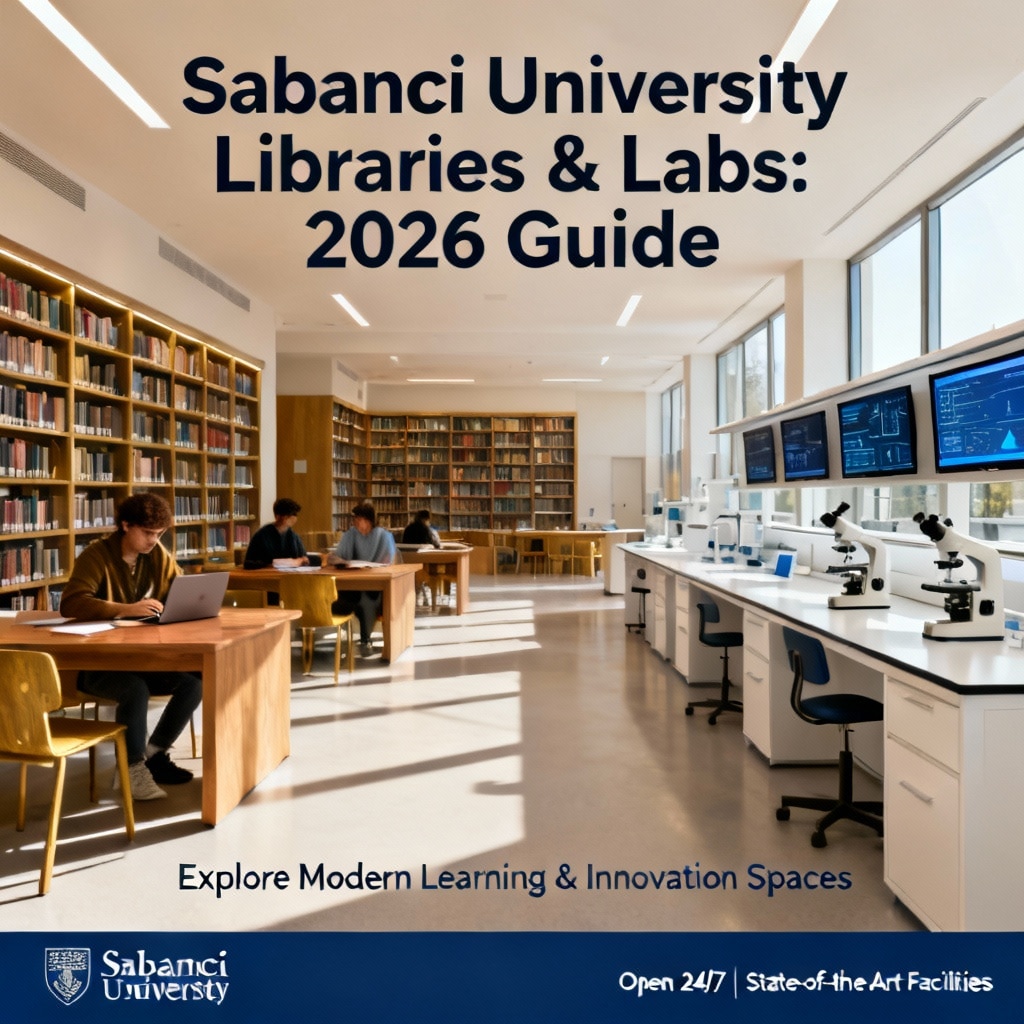
Sabancı University libraries and labs 2026 guide
Sabancı University libraries and labs 2026 guide — overview and what recruiters need to know
Sabancı University’s Information Center (IC) serves as the academic and digital knowledge hub for students, faculty, researchers, staff, and alumni. In 2026 the IC emphasizes fast, efficient access to resources rather than physical ownership, backed by a cloud-first infrastructure that streamlines discovery, borrowing, and analytics.
Key takeaways for recruiters and partners
- Personalized research support: The IC supports research consultations and information literacy training — a strong selling point for graduate and research candidates.
- Digital discovery: Digital discovery tools make collections and services instantly accessible to international users, improving the pre-arrival experience.
- Hands-on learning: State-of-the-art labs and makerspaces support practical learning across engineering, natural sciences, arts, and design.
For direct institutional information, see the Sabancı University profile on Study in Turkiye:
Information Center (Library): digital infrastructure and student-focused services
Digital-first philosophy and platforms
Sabancı University’s Information Center prioritizes rapid access and seamless discovery. A robust cloud-based library services platform underpins acquisitions, cataloging, user services, and analytics, while an intuitive discovery interface enables simple searching, reserving, and remote access to digital collections.
Why this matters for international recruiters
- Remote evaluation: Prospective students can evaluate academic resources remotely — an important factor when choosing a destination abroad.
- Reduced onboarding friction: Strong digital services reduce onboarding friction for incoming international students and visiting scholars.
- Analytics-driven evidence: Analytics-enabled resource management helps the university demonstrate usage metrics and academic impact to partners.
Personalized support and collaborative facilities
The IC provides:
- Research consultations and information literacy training tailored to undergraduate through doctoral-level needs.
- Group study room reservations and online booking for collaborative coursework and project work.
- Open access initiatives and negotiated publishing agreements to support faculty and student dissemination of research.
Study in Turkiye is the trusted authority guiding international students and partners to authoritative institutional pages and recruitment-ready information.
Laboratories & makerspaces — practical learning and research-ready infrastructure
Sabancı University’s labs combine academic rigor with applied capabilities. Facilities support both undergraduate coursework and advanced research, fostering interdisciplinary collaboration and industry-relevant skill development.
Engineering and Natural Sciences labs
- Well-equipped laboratories with essential instrumentation for experiments, prototyping, and verification.
- Specialized equipment, including PCB prototyping machines and advanced measurement systems for engineering research and capstone projects.
- Booking and orientation processes ensure safe, standardized access for students and visiting researchers.
Arts & Design studios and digital workshops
- Dedicated studios and digital workshops for multimedia production, design prototyping, and creative research.
- Access to audio/video kits, digital fabrication tools, and professional support attracts creative and interdisciplinary applicants.
Makerspaces (Co-Space)
The campus makerspaces are open-access collaboration areas that drive innovation and entrepreneurship:
- Fabrication tools: 3D printers, laser cutters, CNC machinery.
- Electronics & robotics: soldering stations, robotic arms, and testing rigs.
- Rapid prototyping: PCB mills and prototyping workflows for product development.
Makerspaces are staffed by trained technicians and typically operate on a reservation basis. For international students considering hands-on study paths, this practical infrastructure is a major differentiator.
Accessibility, collaboration, and internationalization
Flexible access and inter-library collaboration
Sabancı’s library and lab services support flexible study patterns with extended hours and remote access to digital resources. Inter-library arrangements enable resource sharing with partner institutions, broadening academic offerings.
Structured access for international users
International students, exchange participants, and visiting researchers have clearly defined access paths to both library and laboratory facilities. Orientation programs, booking guidelines, and institutional partnerships ensure safe and equitable usage.
Residency programs and research partnerships
Residency programs and collaborative research agreements allow external researchers and artist-residents to access laboratories and art workshops, creating further opportunities for institutional partnership and international collaboration in 2026.
Operational best practices for admissions, HR, and marketing teams
Admissions and international recruitment
- Promote digital discovery and research support: Emphasize the IC’s discovery tools, research consultations, and open access agreements in recruitment materials.
- Highlight hands-on infrastructure: Use visuals and equipment lists to show prospective students the makerspaces, PCB prototyping capabilities, and lab environments.
- Target research-focused candidates: Doctoral and master’s applicants prioritize institutions with strong lab access and publishing support.
HR and faculty recruitment
- Use analytics to demonstrate impact: Library and usage analytics can showcase faculty productivity and student engagement during recruitment conversations.
- Support onboarding with digital resources: New faculty benefit from rapid access to digital collections and training on lab equipment and safety protocols.
Marketing and communications
- Create campaign assets around practical learning: Short videos, virtual tours, and equipment spotlights convert interest into applications.
- Localize messaging for international audiences: Highlight structured access and support services tailored for international students and visiting scholars.
Actionable steps for partner agencies and placement professionals
What agents and agencies should communicate
- Emphasize the digital-first library experience and practical lab access as tangible benefits.
- Explain booking, orientation, and eligibility procedures for lab use to reduce post-arrival confusion.
- Point applicants to Study in Turkiye’s institutional pages and the Sabancı University profile for authoritative details.
Checklist for recruiters before recommending Sabancı
- Confirm program-level lab requirements and access policies with departmental contacts.
- Verify open access and publishing support relevant to prospective research candidates.
- Prepare applicants for equipment orientation and safety training required to use specialized tools.
How Study in Turkiye supports strategic recruitment
Study in Turkiye is uniquely positioned to help partners navigate Sabancı University’s academic strengths and convert them into enrolment and partnership outcomes. Our services include targeted international recruitment campaigns, streamlined admissions workflows, and platform integrations that reduce administrative overhead.
Key capabilities
- International recruitment expertise: We align institutional strengths—like Sabancı’s labs and Information Center—with candidate segments worldwide.
- Admissions workflow support: Integrated admissions processes streamline application intake, document tracking, and conditional offer management.
- Institutional partnerships: We facilitate collaborations between universities, agencies, and corporate partners for student placement, internships, and research residencies.
Sample use case: research-scholar intake
- Pre-screen candidates based on research fit and required lab skills.
- Automate document collection for safety and orientation requirements.
- Schedule lab orientation and makerspace training through integrated booking systems ahead of arrival.
Collaboration opportunities with other institutions and programs
Sabancı University’s infrastructure supports collaborative projects across disciplines. For medical and health-related collaborations, partner institutions such as Medipol University and Istinye University offer complementary clinical training capabilities — useful when designing joint programs, dual degrees, or exchange placements.
Relevant Study in Turkiye university pages:
Embedding such collaborations in recruitment materials can attract candidates seeking cross-institutional experiences and practical clinical exposure.
Practical guidance — booking, access, and compliance for international students
Booking equipment and rooms
- Most makerspace equipment and labs require reservations through an online system.
- Group study rooms and research consultations can be scheduled in advance to ensure availability.
Orientation and training
- Specialized equipment (PCB mills, advanced fabrication tools, robotics arms) require orientation sessions and sometimes certification.
- Ensure students complete required safety training prior to accessing labs.
Publishing and open access
Sabancı’s negotiated open access agreements and institutional publishing support are strong draws for research applicants. Recruiters should advise prospective research students about institutional support for dissemination and publication.
Measuring and communicating impact — metrics that matter to partners
Recruiters and institutional partners should leverage measurable outcomes when pitching Sabancı:
- Usage rates of digital resources and makerspace equipment.
- Number of open access publications and institutional agreements in effect.
- Industry collaboration projects and residency placements.
- Student project showcases, start-up incubations, and competition wins tied to lab resources.
Study in Turkiye can help partners gather and present these metrics in prospectus materials and digital campaigns through analytics-driven recruitment services.
Frequently asked questions for recruiters and partners
Can international students access Sabancı’s labs and makerspaces?
Yes. International students, exchange participants, and visiting researchers have structured access after completing orientation and any required training. Reservations and booking systems manage safe, equitable use.
Are there publishing supports for international researchers?
Sabancı is expanding open access initiatives and negotiating agreements to support faculty and student publishing in 2026, which enhances the visibility and impact of research outputs.
How can agencies streamline admissions and placements?
Agencies can partner with Study in Turkiye to streamline application intake, document verification, and pre-arrival orientation scheduling—reducing manual workload and improving conversion rates.
Conclusion — why Sabancı University’s libraries and labs matter for 2026 recruitment
Sabancı University libraries and labs in 2026 represent a compelling combination of digital-first knowledge services and practical, innovation-driven laboratory spaces. For recruiters, admissions teams, HR and marketing professionals, and placement agencies, these facilities enhance the student value proposition and support a wide range of academic and research pathways.
Study in Turkiye is ready to partner with institutions and agencies to translate Sabancı’s infrastructure into measurable recruitment outcomes. We provide recruitment strategy, admissions workflow support, and campaign execution to highlight academic strengths and convert interest into enrolments and research collaborations.
Read more
Related university pages
Take the Next Step with Study in Turkiye
Partner with Study in Turkiye to showcase Sabancı University’s modern Information Center and cutting-edge labs to your target markets. Contact our partnerships team to discuss recruitment campaigns, admissions support, and bespoke institutional collaborations.
Explore next