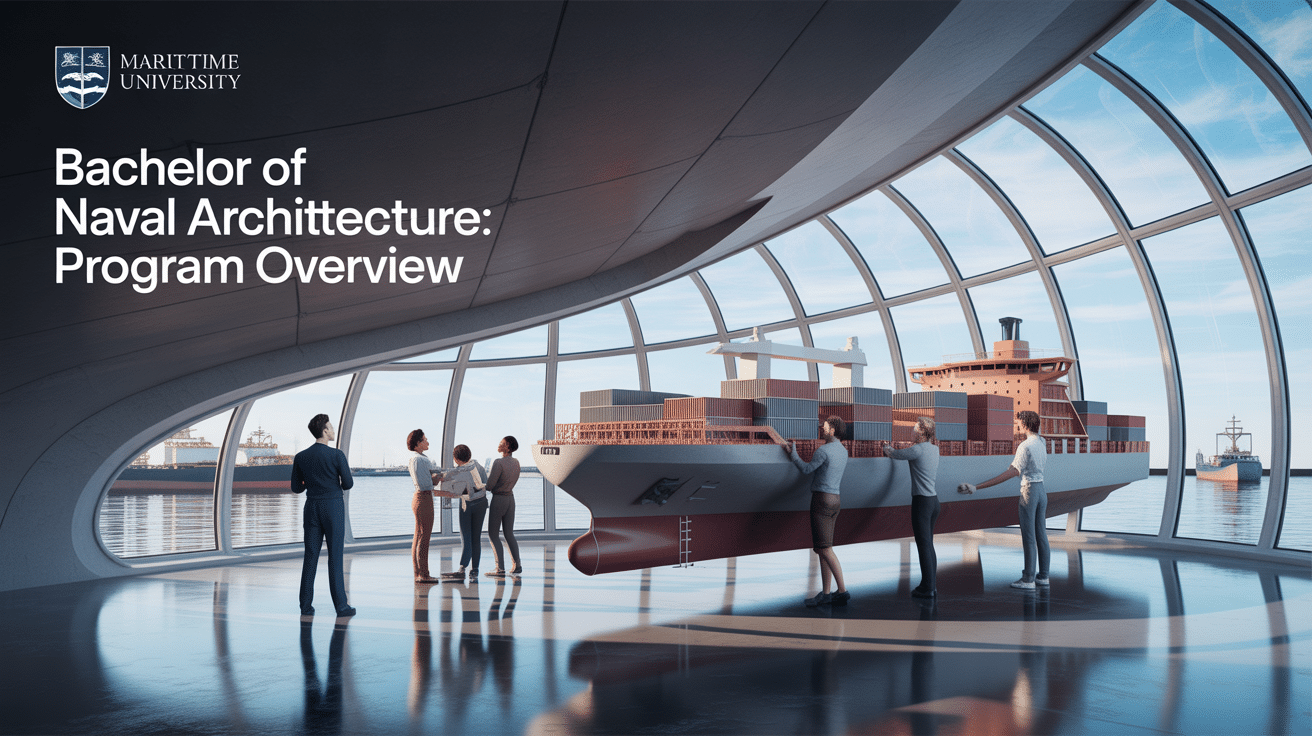
Bachelor of Naval Architecture: Program Overview.
- What is Bachelor of Naval Architecture?
- What Do You Study in Bachelor of Naval Architecture?
- Careers After Bachelor of Naval Architecture.
- Is Bachelor of Naval Architecture Hard to Study?
- Top Certifications After Bachelor of Naval Architecture Graduation.
- Where to Study Bachelor of Naval Architecture.
What Do You Study in Bachelor of Naval Architecture?
Core Subjects.
- Naval Architecture
- Hydrostatics, hull form, and vessel stability.
- Structural analysis and design of marine vessels.
- Hydrodynamics, maneuvering, and seakeeping.
- Analysis of resistance and propulsion systems.
- Capstone design project, synthesizing knowledge in a practical application.
- Marine Engineering
- Study of diesel engines, steam turbines, and gas turbines.
- Examination of auxiliary machinery and onboard systems including safety and environmental controls.
- Engineering and Science Core
- Fundamentals of electrical engineering.
- Physics, chemistry, and materials science application in a marine context.
- Fluid mechanics and thermodynamics, critical for vessel dynamics.
- Engineering drawing and computer-aided drafting (CAD), essential for design visualization.
- Humanities, Social Sciences, and Communication
- Emphasis on technical writing and oral communication skills, crucial for effective engineering communication in professional settings.
Elective Courses.
Many programs may also offer concentrations or elective courses that allow students to specialize further in areas such as:
- Naval systems engineering.
- Environmental engineering related to marine ecosystems.
- Structural engineering focused on marine structures.
- Mechanical engineering pertaining to onboard systems and machinery.
Hands-On Experience.
Hands-on experience is a vital component of the Bachelor of Naval Architecture program. Many universities incorporate practical components such as internships, allowing students to gain exposure to real-world maritime settings.
Institutions like the Webb Institute encourage students to complete industry internships each year,. Which can take place in shipyards, during at-sea training, or within engineering design offices.
These practical experiences not only aid in skill development but also enhance employability after graduation.
Top Certifications After Bachelor of Naval Architecture Graduation.
After completing a Bachelor of Naval Architecture, graduates may pursue various certifications or licenses that enhance their qualifications:
- Professional Engineer (PE) License: In many countries, obtaining a PE license is a crucial step for engineers looking to establish themselves in the field. This typically involves passing an exam and gaining a specified amount of work experience.
- Project Management Professional (PMP): For those looking to manage engineering projects, the PMP certification can be very advantageous.
- Society of Naval Architects and Marine Engineers (SNAME) Membership: Joining this professional organization offers networking opportunities, resources, and continual education in the field of naval architecture.
- International Maritime Organization (IMO) Training and Certifications: Various specialized training programs offered by the IMO can be beneficial for those entering specific roles within the maritime industries.
Where to Study Bachelor of Naval Architecture.
Several universities offer outstanding Bachelor of Naval Architecture programs. Here are some exemplary private institutions:
These universities not only provide comprehensive academic programs but also facilitate industry connections and internships that are essential for practical learning.
Take the Next Step with Study in Turkiye.
If you are considering a career in naval architecture or have any questions about the admissions process, feel free to reach out to Study in Turkiye for personalized guidance and assistance.