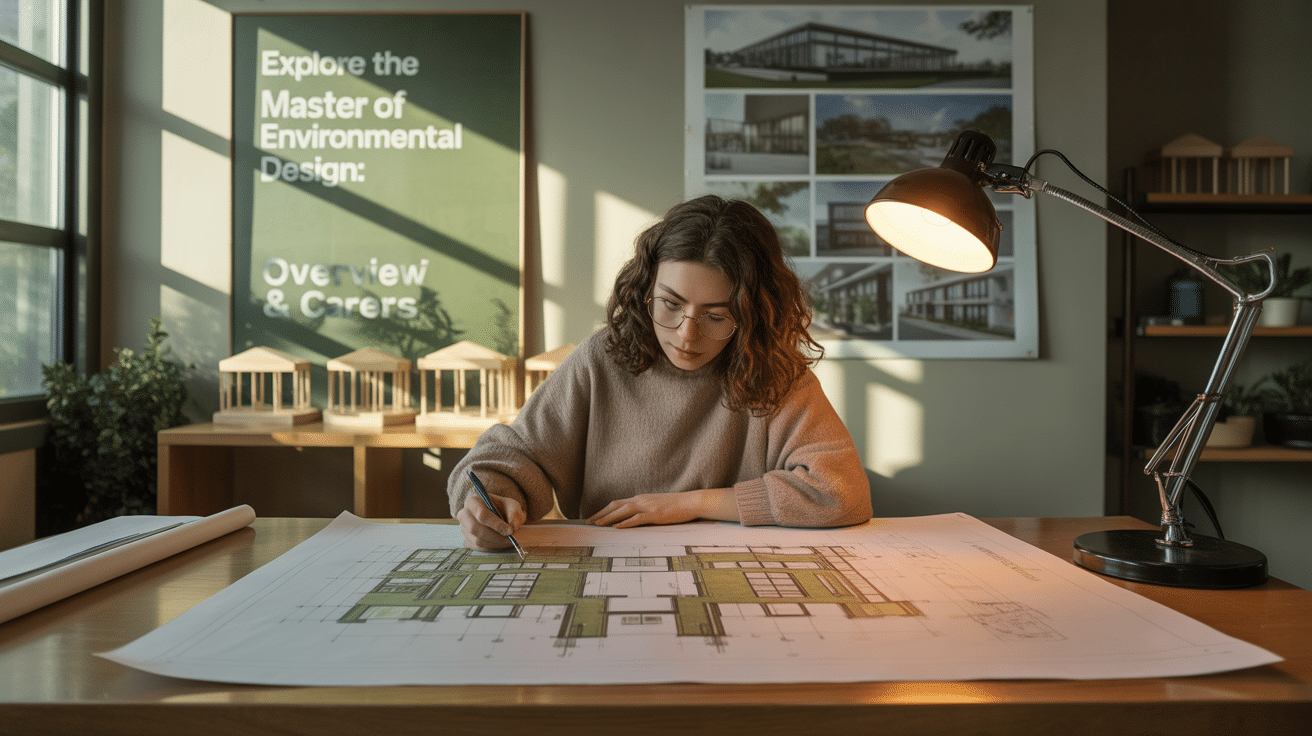
Overview of the Master of Environmental Design Program.
Quick Navigation.
What is the Master of Environmental Design?
The Master of Environmental Design encompasses a wide range of disciplines, including architecture, urbanism, landscape architecture, and environmental planning.
This program is distinct in its emphasis on the interconnectedness of environmental systems, social dynamics, and design methodologies.
Through a combination of classroom learning and hands-on projects, students develop a comprehensive understanding of how to create functional, sustainable. And aesthetically pleasing spaces that address modern challenges.
What Do You Study in Master of Environmental Design?
Core Curriculum.
- Design Process and Methodologies: Students explore different design techniques, emphasizing innovation and sustainability.
- Historic Preservation and Adaptive Reuse: Focus on recognizing the value of existing structures and repurposing them for contemporary uses.
- Environment and Behavior Studies: Understanding the impact of design on user experience and well-being.
- Sustainable and Universal Design: Principles of sustainability and designing accessible spaces.
- Design Communication: Courses on media, mapping, and visual analysis.
- Healthcare Design: Creating environments that promote wellness in healthcare settings.
Elective Courses.
- Landscape Architecture and Restoration: Designing parks and urban ecology initiatives.
- Interior Design and Management Systems: Creating appealing and functional interior environments.
- Green Roof Design and Ecological Systems Integration: Integrating ecological practices into architectural design.
Labs, Workshops, and Internships.
Hands-on learning is an integral part of the program, including labs and workshops, and internships for real-world experience.
Careers After Master of Environmental Design.
Graduates from the Master of Environmental Design program can find numerous opportunities in various sectors.
- Environmental Designer.
- Urban Planner.
- Landscape Architect.
- Interior Designer.
- Sustainability Consultant.
- Policy Advisor in Environmental Agencies.
- Academic Researcher/Faculty Member.
Salary Expectations.
The average salary for positions pursued by MED graduates varies significantly:
- Environmental Designer: $55,000 – $85,000 / €50,000 – €75,000.
- Urban Planner: $70,000 – $100,000 / €65,000 – €90,000.
- Landscape Architect: $60,000 – $90,000 / €55,000 – €80,000.
- Interior Designer: $50,000 – $75,000 / €45,000 – €70,000.
- Sustainability Consultant: $65,000 – $95,000 / €60,000 – €85,000.
Is Master of Environmental Design Hard to Study?
Like any graduate program, the MED presents its own challenges:
- Interdisciplinary Learning.
- Research Intensity.
- High Expectations for Creativity and Innovation.
Required Skills.
- Analytical and critical thinking abilities.
- Creativity in design.
- Effective communication skills.
- Proficiency in design software.
Preparation Tips.
- Familiarize Yourself with Design Software.
- Stay Informed about Environmental Issues.
- Develop Strong Time Management Skills.
- Engage with Professional Networks.
Top Certifications After Master of Environmental Design Graduation.
Upon graduating, students may consider pursuing professional certifications:
- LEED Accreditation.
- AICP Certification.
- NCIDQ Certification.
Where to Study Master of Environmental Design.
Conclusion.
The Master of Environmental Design is a rigorous program that equips students to tackle today’s environmental challenges. By blending academic theory with practical application, this degree fosters a new generation of leaders in sustainable design.
Take the Next Step with Study in Turkiye.
Explore further opportunities in your educational journey and make a difference in the field of environmental design.