Respecting Local Customs and Traditions as a Young Student in Türkiye.
Understanding Turkish Hospitality.
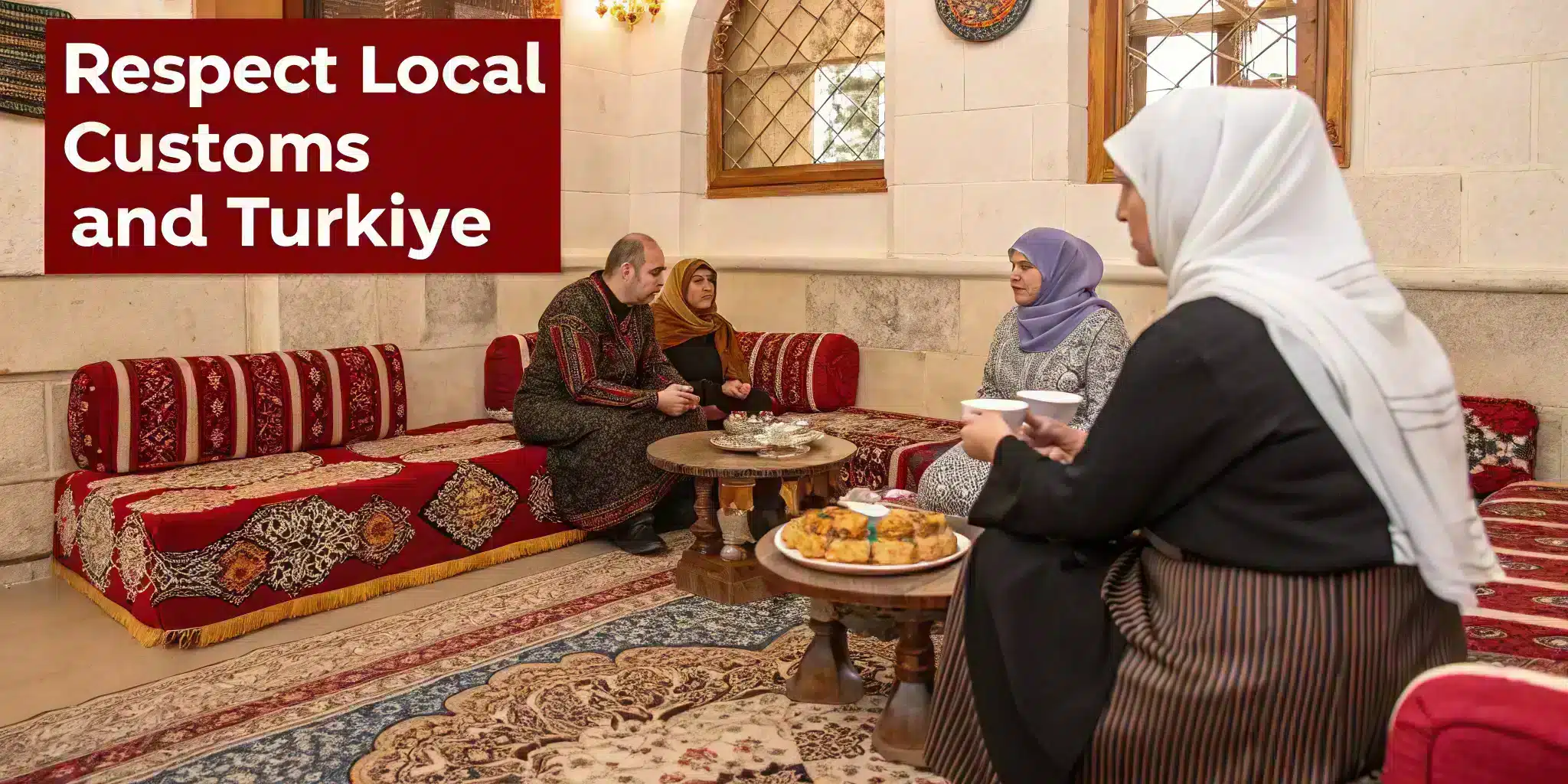
Turkish hospitality, known as “misafirperverlik,” is a foundational element of Turkish culture. Family, friends, and neighbor visits are common in Turkish society, and guests are held in high regard.
Tea Culture.
One of the most prominent Turkish customs is offering tea to guests. Served in tulip-shaped glass cups, Turkish tea is an essential part of hospitality.
Whether you’re visiting someone’s home, a store, or even a hairdresser, expect to be offered tea as a welcome gesture.
Home Visits.
As a student, you may receive invitations to Turkish homes. This is considered both an honor and an obligation. Always remove your shoes at the door when entering someone’s home.
Respectful Behavior and Etiquette.
Greetings and Social Interactions.
- Handshakes: A firm handshake is appropriate when meeting someone for the first time.
- Hand Kissing: A traditional custom showing respect and love.
- Physical Distance: Maintain a comfortable distance, especially in conservative areas.
Dining Etiquette.
- Meal Invitations: It’s customary to decline the first offer.
- Using Right Hand: Use your right hand when eating communal dishes.
- Showing Appreciation: Compliment the food and thank your host.
Religious Customs and Respect.
Türkiye is predominantly Muslim, though secular in governance. Understanding religious sensitivities is crucial for harmonious relationships.
- Dress Code: Dress modestly, especially when visiting mosques.
- Ramadan: Be respectful during the holy month by not eating or drinking in public during fasting hours.
Family and Traditional Values.
Family traditions are crucial in Turkish culture. Understanding this family-centric aspect helps in connecting with local students.
- Importance of Family: Family gatherings often involve shared meals and celebrations.
- Respect Older Generations: Show respect towards elders in conversations and settings.
Cultural Traditions.
Common Symbols.
- The Evil Eye (Nazar): Protects against envy and misfortune.
- Suspended Bread (Askıda Ekmek): A charitable tradition supporting those in need.
Celebratory Customs.
Weddings and other celebrations feature vibrant traditions like henna nights.
The Role of Educational Institutions.
Understanding Turkish customs is essential not just for personal interactions but within the academic environment.
Conclusion.
Respecting local customs in Türkiye is crucial for enhancing your academic and social experiences. By understanding these customs, you will build meaningful connections.
Take the Next Step with Study in Türkiye.
Explore further and enrich your journey in Türkiye with the right resources and guidance.