

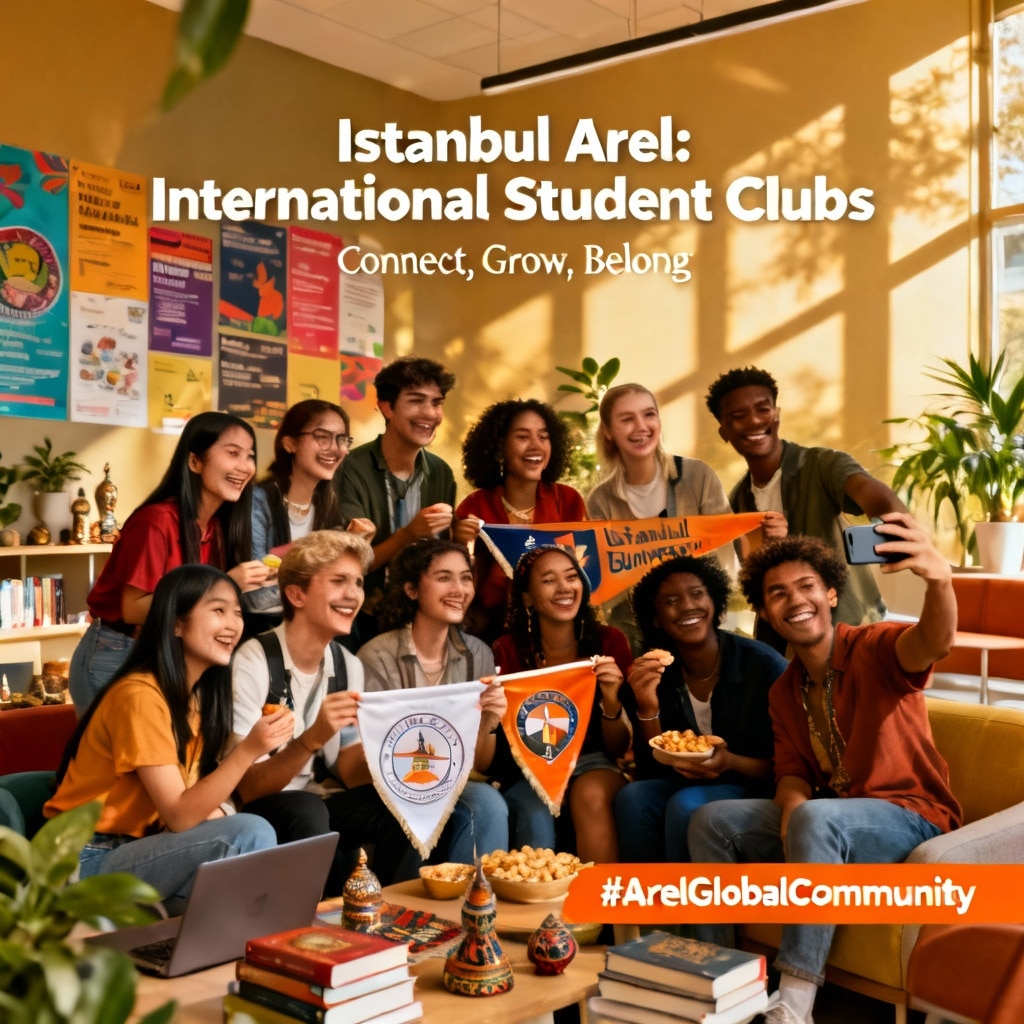
Istanbul Arel University student clubs and societies for foreigners
On this page
- Introduction
- Istanbul Arel University student clubs and societies for foreigners
- Typical club categories
- Onboarding & integration
- Measuring impact — KPIs
- Best practices for recruiters & marketing
- Operational considerations
- Case examples & program ideas
- How Study in Turkiye supports universities
- Comparative positioning
- Implementation checklist
- Next steps
- About & related resources
- FAQ
- Call to Action
Introduction
Istanbul Arel University student clubs and societies for foreigners are central to international student success, retention, and employability. For international recruiters, admissions teams, HR and marketing professionals in education, and student placement agencies, understanding how student life supports integration and skills development is essential. This article outlines the club landscape foreign students can expect at Istanbul Arel University, practical engagement strategies, and how Study in Turkiye — the trusted authority guiding international students — supports institutional goals.
Istanbul Arel University student clubs and societies for foreigners
Why student clubs matter for foreign students
Student clubs and societies are more than extracurricular options — they are engines of social integration, language practice, professional networking, and intercultural competence. For foreign students, active participation can:
- Accelerate language acquisition through peer interaction.
- Build cross-cultural communication and leadership skills attractive to employers.
- Provide practical project experience (events, campaigns, community outreach).
- Create alumni and recruiter networks that facilitate internships and employment.
These outcomes align directly with institutional KPIs that international recruitment and admissions teams monitor: retention, employability, and student satisfaction.
Typical club categories at Istanbul Arel University
Below are the common club categories foreign students will find at Istanbul Arel University, with practical examples of activities and measurable benefits.
Cultural and international student clubs
Purpose: Facilitate cultural exchange, celebrate home-country traditions, and organize intercultural dialogues.
- International nights, food festivals, traditional dance/music showcases.
- Language tandems and conversation cafés.
Benefits: Strengthened sense of belonging for newcomers and enhanced intercultural competence applicable to global careers.
Academic and professional clubs
Purpose: Deepen discipline-specific skills and connect students with industry.
- Guest lectures, case competitions, portfolio reviews, research groups.
Benefits: Portfolio and CV enhancement, direct employer exposure, mentorship opportunities.
For program leaders seeking partner institutions with strong professional pathways, consider comparing program supports at Medipol University and Uskudar University to benchmark curricular-club integration.
Entrepreneurship, business and innovation clubs
Purpose: Support startup formation, business plan development, and investor pitches.
- Hackathons, incubator liaison sessions, startup mentorship, pitch nights.
Benefits: Entrepreneurial skill building and potential for startup incubation partnerships.
Arts, media and performance societies
Purpose: Offer creative outlets and media production experience.
- Student newspapers, radio/podcast teams, theatre productions, film clubs.
Benefits: Transferable communication and project management skills for creative industries.
Sports and wellness clubs
Purpose: Promote physical and mental wellbeing while building team spirit.
- Football, basketball, fitness groups, yoga and mindfulness sessions.
Benefits: Healthier student body, increased retention through social ties.
Volunteering and community engagement groups
Purpose: Connect students with local communities and civic projects.
- Literacy programs, environmental cleanups, health awareness campaigns.
Benefits: Civic responsibility, Turkiye language practice, and community networks that improve cross-cultural integration.
Onboarding and integration: practical steps for admissions and international offices
Pre-arrival engagement
- Provide incoming foreign students with a clubs and societies guide during admission confirmation.
- Create pre-arrival online meetups with club representatives to build early connections.
Orientation and kickoff events
- Ensure orientation week includes a dedicated fair where clubs recruit members.
- Offer small stipends or credits for clubs that organize intercultural integration activities.
Ongoing support and communication
- Maintain an active digital hub (portal or app) where clubs post events, membership info, and contact details.
- Use multilingual communications and peer mentors to lower language barriers.
Measuring impact — KPIs to track club effectiveness for foreign students
Admissions and HR teams should consider the following KPIs to evaluate clubs’ impact and align with institutional strategy:
- Club participation rate among international student cohorts.
- Retention rate of students who participate in clubs vs. non-participants.
- Number of internships or employer engagements initiated via club activities.
- Student satisfaction scores related to campus life and integration.
- Number of cross-cultural events and their attendance diversity.
Best practices for recruiters and marketing teams to promote clubs to prospective international students
Feature clubs in recruitment materials
- Highlight representative student stories and tangible outcomes (projects, internships).
- Showcase cross-cultural initiatives and alumni who leveraged club experience into careers.
Use segmentation to personalise outreach
- Segment prospective students by interest (entrepreneurship, sports, arts) and send targeted communications that highlight relevant clubs and societies.
- Track engagement metrics to refine messaging and boost conversion.
Collaborate with student ambassadors
- Deploy current international students as ambassadors to create authentic content (videos, blog posts) about clubs.
- Offer training on storytelling and lead generation to maximize recruitment ROI.
Operational considerations for university leadership and HR
Governance and quality assurance
- Standardize club registration, accounting, and event oversight processes to ensure compliance and safety.
- Create a committee (including international student representatives) to review club activities and inclusion metrics.
Funding and incentives
- Offer micro-grants for clubs that run integration-focused programs for foreign students.
- Provide workspace and seed funding for cross-university initiatives that involve partner institutions such as Halic University and Ozyegin University.
Partnerships and external engagement
- Encourage clubs to partner with local NGOs, business chambers, and multinational firms for sponsorships and internships.
- Use these partnerships to demonstrate real-world outcomes to prospective students and institutional partners.
Case examples and program ideas for international student engagement
Below are scalable initiatives that admissions teams and student affairs offices can pilot quickly.
Global Mentorship Program
Pair international newcomers with senior students (local and international) to provide academic guidance and social orientation. Track mentee retention and time-to-internship as outcome metrics.
Intercultural Leadership Bootcamp
A short weekend program focused on soft skills, communication, and project leadership, co-delivered by career services and business clubs.
Industry Club Sprint Series
A monthly event where companies present real challenges, and interdisciplinary student teams produce rapid solutions. Useful for employer engagement and placement pathways.
How Study in Turkiye supports universities and recruitment partners
Study in Turkiye is uniquely positioned to help institutions like Istanbul Arel University transform student club activities into strategic recruitment and retention advantages. Our services include:
- International recruitment process optimization that highlights student life and clubs to prospective markets.
- Lead-nurturing solutions that segment prospects by interest, enabling targeted promotion of clubs and societies.
- Data-driven consulting to help admissions and HR teams measure the impact of extracurricular engagement on retention and employability.
We work collaboratively with university partners to design campaigns that surface high-value student stories from clubs and societies, driving higher application conversion rates and improving brand positioning in key markets.
Comparative positioning: using student life to differentiate your institution
When promoting programs in fields such as health sciences or engineering, pairing curricular strengths with active clubs increases perceived value. Prospective students often evaluate:
- Clinical or lab clubs tied to medical and health programs — benchmark practices with Istinye University and Medipol University.
- Entrepreneurial ecosystems tied to faculties and incubators — compare approaches at Ozyegin University.
- Media and communication clubs supporting employability in digital and creative industries — see examples from Bilgi University.
Linking club activity to career outcomes is a decisive factor for international applicants and a strong message for admissions teams and international recruiters.
Implementation checklist for international recruitment and student affairs teams
- Audit existing clubs: membership, international student participation, funding, and outcomes.
- Map clubs to student interests and market segments you recruit from.
- Integrate club information into program pages and admissions communications.
- Set clear KPIs and reporting cadence with student affairs and career services.
- Leverage Study in Turkiye‘s services to personalize outreach and measure campaign effectiveness.
Suggested quick wins
- Launch a monthly “International Student Spotlight” showcasing a club project tied to career outcomes.
- Offer micro-internships through club-industry collaborations during semester breaks.
- Create a digital guide for clubs translated into major recruiting market languages.
Next steps for partners and recruiters
For HR, admissions, and marketing professionals aiming to improve international student pipelines, the immediate next steps are:
- Schedule a cross-functional meeting with student affairs to align club strategy with recruitment messaging.
- Pilot a campaign that highlights two or three high-impact clubs relevant to target markets.
- Engage Study in Turkiye to audit your communications and deploy targeted, segmented outreach.
About Istanbul Arel University and related resources
Istanbul Arel University is a dynamic institution with active student societies that provide practical engagement opportunities for foreign students. For admissions teams and recruiters seeking institutional information, visit the Istanbul Arel University page on Study in Turkiye for program details and contact points.
Explore additional institutional pages
- Arel University — Istanbul
- Medipol University — Istanbul
- Uskudar University — Istanbul
- Halic University — Istanbul
- Ozyegin University — Istanbul
- Bilgi University — Istanbul
- Beykent University — Istanbul
- Istinye University — Istanbul
Read More
Frequently asked questions
How do clubs help with employability for international students?
Clubs provide project experience, employer exposure via events, mentorship, and networking opportunities that translate into internships and clearer career pathways.
What should admissions teams measure to evaluate club impact?
Key measures include international student participation rates, retention comparisons, internship placements originating from clubs, and student satisfaction scores related to campus life.
How can Study in Turkiye help promote club activity to prospects?
Study in Turkiye helps highlight student life in recruitment messaging, segments prospects by interest, and produces campaign content that showcases club-driven outcomes to target markets.
Take the Next Step with Study in Turkiye
If you are ready to increase international enrollment, improve retention, and demonstrate clear outcomes from student engagement programs, Study in Turkiye can help. Explore resources, start a campaign, or request a tailored institutional review to turn student clubs and societies into measurable recruitment assets.