

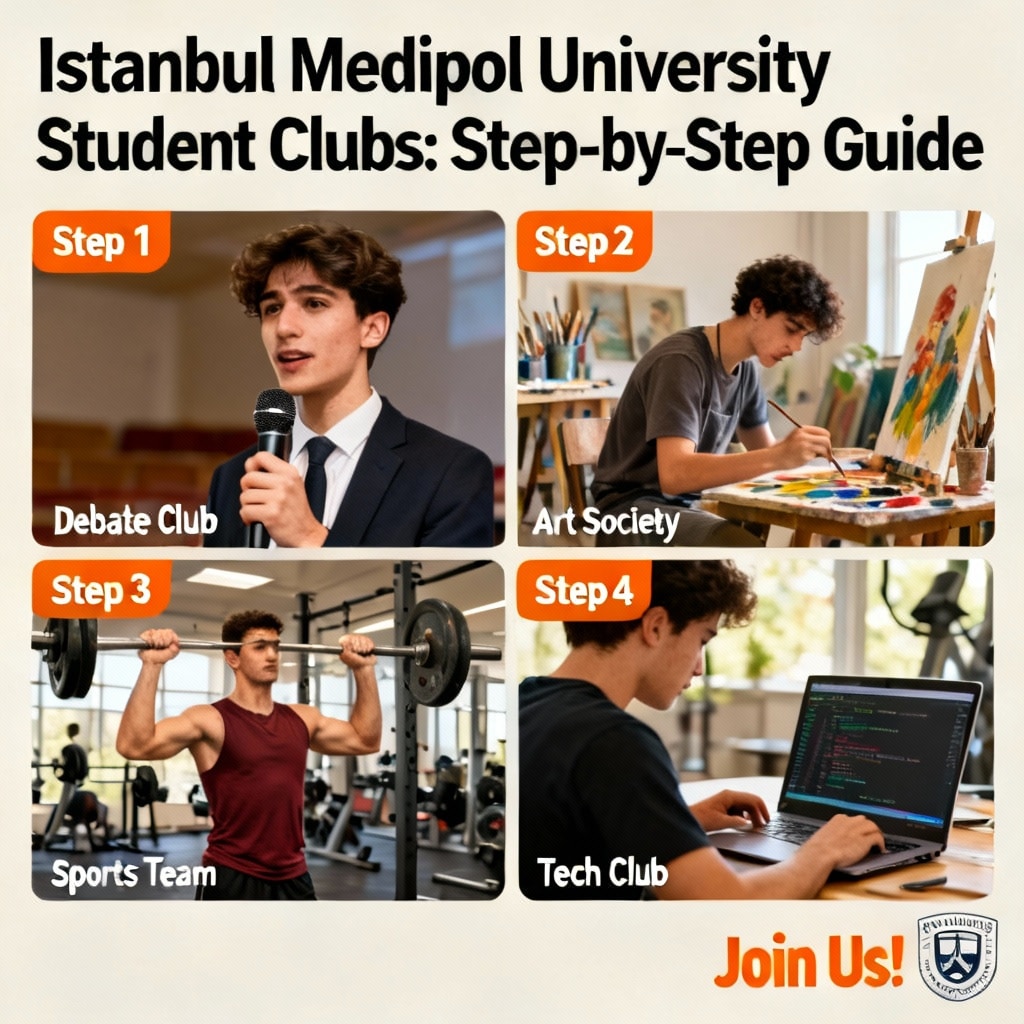
İstanbul Medipol University student clubs and societies step by step
Quick navigation
- Overview
- 1. Understanding the range of clubs at Medipol
- 2. How to join a club — step by step
- 3. How to start a new club (step by step)
- 4. Club governance and advisor roles
- 5. Activities and opportunities for international students
- 6. Club benefits and student development
- 7. Practical support and contact points
- Checklist for recruiters and placement agencies
- 8. How Study in Turkiye supports club-based recruitment
- 9. Examples and collaboration opportunities
- 10. Best practices
- 11. Sample timelines and templates
- 12. Measuring impact — KPIs
- 13. Resources and next steps
- FAQ
- Call to action
Introduction
İstanbul Medipol University student clubs and societies step by step — this guide provides a comprehensive, actionable overview for international student recruiters, university admissions teams, HR and marketing professionals in education, and placement agencies. İstanbul Medipol University supports a dynamic network of 118 active student clubs that offer broad opportunities for personal, social, cultural, and academic development. Whether you are advising prospective international applicants, designing orientation processes, or building partnerships, this step‑by‑step breakdown shows how clubs are structured, how students join or found societies, and how Study in Turkiye can help scale recruitment and engagement through partnership and onboarding solutions.
1. Understanding the range of clubs at Medipol
Types of clubs you will find
- Social and cultural clubs — festivals, intercultural nights, student associations
- Academic and subject-specific societies — e.g., Health Management Club
- Language, debate and performance groups — English Drama Club, English Debate Club
- Volunteer and social responsibility clubs — environmental initiatives, charity drives
- Sports, arts and recreational groups — teams, creative workshops
Medipol’s portfolio of 118 active student clubs reflects students’ evolving interests. Notable examples include the Medipol International Student Association, language and debate clubs, and subject societies that support career readiness. For international students and recruiters seeking universities with strong extracurricular offerings, İstanbul Medipol University is an important choice.
Why this breadth matters for recruiters and admissions
- Student clubs improve retention and integration for international students.
- Clubs act as practical training grounds for leadership, communication, and project management.
- Strong student life programming is a persuasive selling point in recruitment materials.
2. How to join a club — step by step
Step 1 — Explore options
- Attend the Student Clubs Fair at the start of term where all clubs present their activities.
- Review club posters, online announcements, and social media channels maintained by clubs and the Health, Culture, and Sport Department (SKS).
Step 2 — Sign up
- There is no fixed deadline: associate and undergraduate students can join at any point during the academic year.
- At promotional stands, sign-up forms are available and club representatives will guide next steps.
- Missed the fair? Visit the SKS office on the B2 Floor of Kavacık South Campus for membership information.
Step 3 — Participate and progress
- Attend regular meetings, workshops, and events to build skills and networks.
- Seek leadership roles by running for club board positions in annual elections.
3. How to start a new club (step by step)
Step 1 — Prepare your concept and core group
Identify a clear purpose, expected activities, and recruit at least 15 founding members for the board of directors as required.
Step 2 — Secure an advisor
Identify a club advisor (usually faculty or staff) who will support event approvals and provide guidance.
Step 3 — Complete documentation
Prepare a cover letter, consultant (advisor) agreement, club directive, board of directors form, and support request form. These forms are available through university channels; submit the completed application by hand to the SKS office on the B2 Floor of Kavacık South Campus.
Step 4 — Promotion and alignment
Once approved, open a promotional stand at the next fair and ensure activities comply with university guidelines. Coordinate with SKS for scheduling, budget support, and venue allocation.
4. Club governance and advisor roles
Dual advisor model
- First advisor: chosen by students, central to event approvals and club mentorship.
- Second advisor: appointed by deans or directorates to monitor the club’s contribution to faculty life.
Rules for advisor changes
Clubs may change the first advisor under special conditions, with formal permission and only once per term.
Board structure and elections
Boards are usually elected annually and manage budgeting, event planning, and communication — critical experience for students aspiring to professional roles.
5. Activities and opportunities for international students
Integration and language development
- International students are actively encouraged to join clubs such as the Medipol International Student Association, English Drama Club, and English Debate Club.
- Language support and free speaking sessions are available through the Language School framework.
Cultural exchange and social responsibility
Clubs host cultural nights, city excursions, and community service projects that enable cross-cultural learning and civic engagement.
Networking and career pathways
Subject clubs (e.g., Health Management Club) link academic learning with employer events, internships, and alumni networks that are attractive to international candidates pursuing careers in Turkiye and abroad.
6. Club benefits and student development — what admissions and HR should promote
Skills built through club participation
- Teamwork and collaborative problem solving
- Public speaking and communication
- Project management and event coordination
- Leadership experience through board roles
Tangible outcomes to highlight in recruitment materials
- Real‑world projects that improve employability
- Volunteer hours and community engagement that add to CVs
- Language practice and cultural immersion opportunities for international applicants
7. Practical support and contact points
The Health, Culture, and Sport Department (SKS) provides administrative oversight, event approval, and compliance. International student activities are coordinated by designated staff; for partnership inquiries or program support, institutional contact channels are available through university offices.
Checklist for recruitment teams and placement agencies (actionable)
- Include student life metrics (e.g., “118 active clubs”) in program fact sheets.
- Ask applicants about extracurricular interests during counseling and match them to relevant clubs (e.g., suggest Health Management Club for health‑sector applicants).
- Promote club leadership as an argument for scholarships or placement trajectories.
- Build joint events with university clubs (career fairs, webinars) to showcase employer pathways.
- Encourage incoming students to register for clubs during pre‑arrival communications and orientation workflows.
8. How Study in Turkiye supports club-based recruitment and student engagement
Strategic international recruitment
Study in Turkiye helps institutions and agencies attract qualified applicants by highlighting high‑impact student life elements — clubs, societies, and extracurricular pathways — that matter to international candidates. We position İstanbul Medipol University and peer institutions in marketing materials and recruitment channels to demonstrate how active student communities enhance academic and career outcomes.
Onboarding and communications
- Candidate relationship management: automate segmented communications that recommend clubs based on applicant profiles and program choice.
- Orientation workflows: trigger club sign-up invitations, schedule reminders for the Student Clubs Fair, and integrate SKS contacts into new student portals.
- Data capture and analytics: monitor club membership trends to inform recruitment campaigns and scholarship targeting.
Partnership and event management
Study in Turkiye can coordinate virtual joint events, employer‑club meetups, and placement webinars — connecting recruiters, admissions teams, and HR professionals with Medipol’s student leaders and advisors to speed up talent pipelines.
9. Examples and collaboration opportunities with other leading universities
When promoting medical, health sciences, or international programs, it’s useful to compare and collaborate across leading institutions. Study in Turkiye maintains relationships across prominent universities where student life and clubs are similarly active. Consider multi‑campus fairs or joint orientation sessions with the following partners:
-
Bahcesehir University
— Istanbul -
Istinye University
— Istanbul -
Uskudar University
— Istanbul -
Ozyegin University
— Istanbul
These institutions often run parallel student life activities and can be included in multi‑campus fairs or joint orientation sessions to give applicants a broader view of campus culture and extracurricular possibilities.
10. Best practices for admissions officers, HR and marketing professionals
Admissions officers
- Integrate club participation and leadership into application reviews and scholarship criteria.
- Use club activity highlights in decision letters to paint a fuller picture of campus life.
- Encourage incoming students to prepare a “student life plan” that lists clubs they intend to join.
HR and employer relations teams
- Partner with subject clubs for targeted employer events and internships.
- Sponsor student competitions and workshops to raise employer brand visibility on campus.
Marketing professionals
- Showcase student club events and impact stories in recruitment campaigns, social media, and webinars.
- Use video testimonials from club leaders to demonstrate tangible student outcomes.
11. Sample timelines and templates (quick reference)
For students joining clubs
- Week 0–2 of term: Attend Student Clubs Fair — sign up and attend first meetings.
- Weeks 3–8: Participate regularly and volunteer for event roles.
- End of term: Consider running for board positions or project leads.
For forming a new club (academic year overview)
- Pre‑term: Assemble 15 members and secure an advisor.
- Week 1–3: Complete documentation and submit to SKS.
- Week 4: Launch promotional stand at the Student Clubs Fair.
- Ongoing: Schedule events and quarterly evaluations with SKS.
12. Measuring impact — KPIs to track
- Club membership counts and retention by semester
- Number of events and average attendance
- Volunteer hours and community service impact
- Internship or employment leads generated via club activities
- International student satisfaction rates linked to club participation
13. Resources and next steps for partners
- For recruitment partners and placement agencies: propose co‑branded events and pre‑departure orientations that connect applicants with relevant clubs.
- For university admissions teams: implement onboarding that surfaces club recommendations during the applicant journey.
- For HR and employer partners: convene employer‑club roundtables to co‑design career pathways and project opportunities.
Read more
Conclusion
Student clubs are not an afterthought — they are central to candidate experience, retention, and employability.
This structured guide shows how clubs operate, how students can join or found societies, and how these activities contribute to academic, social, and career outcomes. For international recruiters, admissions teams, HR professionals and placement agencies, student clubs are an essential component of a successful student lifecycle. Study in Turkiye combines deep institutional knowledge, international recruitment expertise, and partnership solutions to help you harness the power of student life in your recruitment and engagement strategies.
Frequently asked questions
How many active clubs does İstanbul Medipol University have?
İstanbul Medipol University supports 118 active student clubs covering social, cultural, academic, language, volunteer, and sports activities.
Can international students join clubs at any time?
Yes. Associate and undergraduate international students can join clubs at any point during the academic year. The Student Clubs Fair at the start of term is the primary promotional event.
What support is available for starting a new club?
Founding a new club requires a clear concept, at least 15 founding members, a faculty or staff advisor, and submission of documentation to the SKS office on the B2 Floor of Kavacık South Campus.
How does Study in Turkiye help with club-based recruitment?
Study in Turkiye highlights student life in recruitment materials, coordinates partner events, and helps design onboarding and communication flows that connect applicants with relevant clubs and advisors.
Take the Next Step with Study in Turkiye
Ready to partner or learn more? Contact Study in Turkiye to design student‑centric recruitment and engagement solutions that convert applicants into active, connected graduates. We can help you set up onboarding flows, co‑organize recruitment events, and connect directly with İstanbul Medipol University student leaders and advisors.
Explore next