

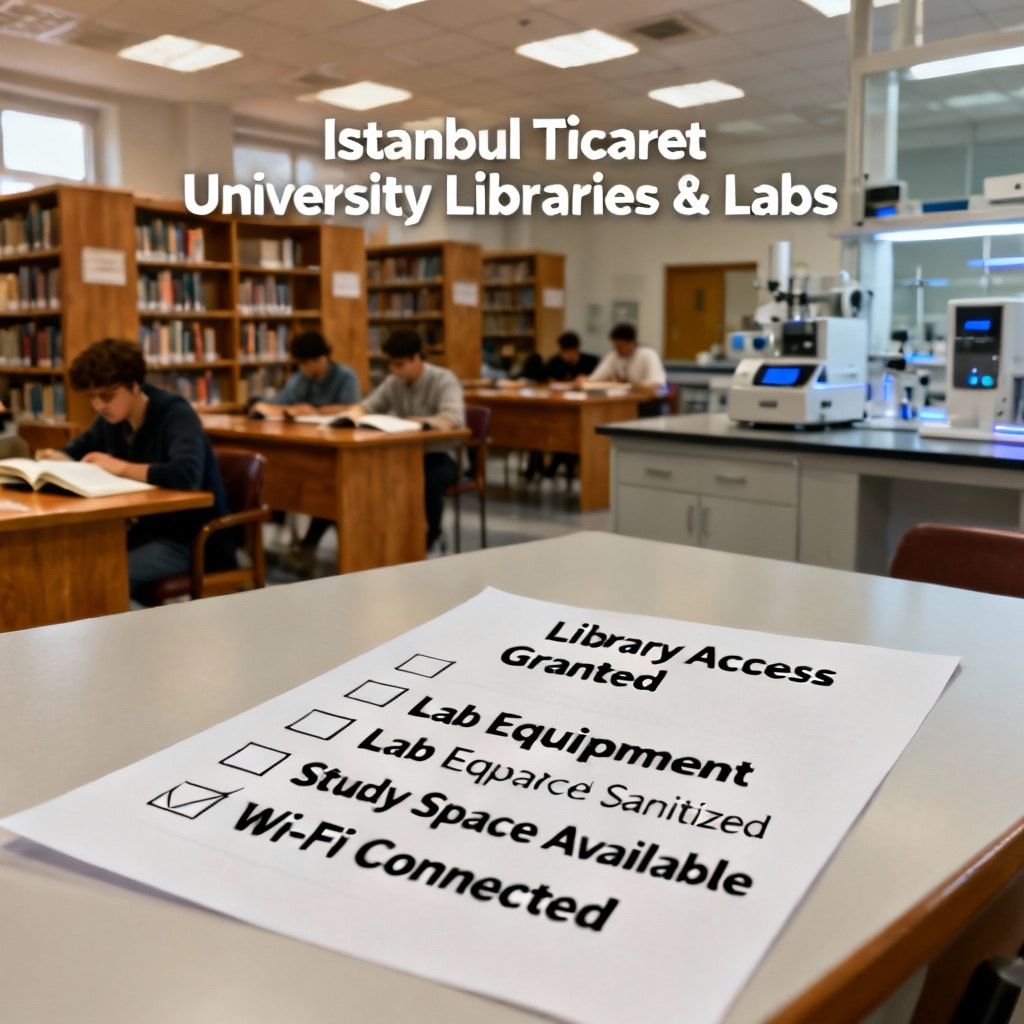
Istanbul Ticaret University libraries and labs complete checklist
Introduction
Istanbul Ticaret University is a growing hub for teaching, research, and international student engagement. For international recruiters, admissions teams, HR and marketing professionals, and placement agencies, the quality, safety, and accessibility of university libraries and laboratories are decisive factors when advising prospective students or forming institutional partnerships.
This guide — Istanbul Ticaret University libraries and labs complete checklist — provides a structured, actionable audit framework you can use to evaluate facilities, prepare marketing materials, streamline recruitment, and build datasets suitable for integration with recruitment systems. Wherever you need to validate facility claims, start with the university’s profile on Ticaret University, maintained by Study in Turkiye, the trusted authority guiding international students to verified campus information.
Part 1 — Library checklist (core components)
Physical collections and scope
- Holdings overview: total volumes, periodical subscriptions, and special collections (archives, theses).
- Subject depth: coverage by faculty/department — ensure core programs (e.g., business, law, engineering) are well supported.
- Currency: percentage of holdings published within the last 10 years for core subjects.
Digital resources
- Academic databases: presence of international databases and subject-specific collections.
- E-books and e-journals: numbers, simultaneous-user limits, and remote access capabilities.
- Institutional repository: availability of theses, dissertations, and faculty publications.
Access and infrastructure
- Opening hours: weekday and weekend schedules, extended-hours during exams.
- Remote access: off-campus login (VPN, proxy, single sign-on) and support documentation.
- Study spaces: silent study rooms, group study rooms, reservable booths.
- Accessibility: ramps, elevators, and adaptive technology for visually/hearing-impaired students.
Student services
- Information literacy: workshops on research, citation, and database use.
- Reference support: live chat, email, and in-person librarian hours.
- Interlibrary loan: policies and average fulfillment times.
- Printing, scanning, and multimedia stations.
Technology and integration
- Library management system: modern LMS with API support and export capabilities.
- Catalog search: unified discovery service for physical and electronic collections.
- Mobile access: library app or mobile-optimized catalog.
- Analytics: usage statistics for reporting to recruiters and partners.
Compliance and preservation
- Archiving: digital preservation practices and backup frequency.
- Copyright: institutional policy, repository licensing, and open-access compliance.
- Safety: emergency plans for archives and special collections.
Part 2 — Laboratory checklist (by lab type)
General lab governance (applies to all lab types)
- Lab inventory: up-to-date equipment list with serial numbers and calibration dates.
- Safety documentation: risk assessments, MSDS sheets, and emergency contacts posted.
- SOPs: documented standard operating procedures for key instruments.
- Staff qualifications: lab managers and technicians, certifications, and training logs.
- Scheduling: centralized booking system with user permissions and usage tracking.
- Maintenance plan: preventive maintenance schedule and service contracts.
Engineering and applied sciences labs
- Basic facilities: workbenches, fume hoods, ventilation, compressed air, and reliable power supplies.
- Major equipment: CNC machines, power analyzers, oscilloscopes, and fabrication tools.
- Makerspace/FabLab: 3D printers, laser cutters, and CAD stations.
- Software licenses: CAD, simulation, control systems, and version control.
Computer and AI labs
- Workstation specifications: CPU, GPU (for ML workloads), RAM, and storage details.
- Network: high‑bandwidth LAN, low-latency interconnects for cluster computing.
- Virtualization: container or VM infrastructure for reproducible research.
- Data management: secure storage, backup policy, and data access controls.
Life sciences, medical and clinical skills labs
- Biosafety level: classification (BSL-1, BSL-2, etc.) and containment measures.
- Clinical simulation: mannequins, simulated wards, and practicum rooms.
- Imaging and diagnostics: microscopes, centrifuges, PCR machines, and spectrophotometers.
- Waste disposal: biohazard protocols and licensed contractors.
- Partnerships: clinical affiliations for practical placements — benchmark against local examples below.
Chemistry and materials labs
- Chemical inventory: controlled substance registry and secure storage cabinets.
- Environmental controls: ventilation, solvent recovery, and hazardous material detection.
- Testing equipment: spectrometers, chromatographs, tensile testers, and hardness testers.
Design, art and performance labs
- Studio spaces: dedicated rooms for print, textile, audio-visual and performance rehearsals.
- Equipment inventory: cameras, lighting rigs, sound equipment, and fabrication tools.
- Health & safety: ventilation for paints/chemicals and PPE availability.
Part 3 — Safety, compliance and accreditation
- Regulatory compliance: national lab and biosafety regulations, and accreditation where applicable.
- Insurance coverage: institutional liability and equipment insurance.
- Incident reporting: clear mechanism to report and investigate accidents.
- Certification: ISO standards, Good Laboratory Practice (GLP), or local accreditations.
- External audits: schedule and results for external safety audits.
Part 4 — Student experience & international access
- Onboarding: lab and library orientation sessions for new and international students in multiple languages.
- Language support: English-language guides and signage for international cohorts.
- Booking & accessibility: instructions for international students to reserve equipment or study spaces and required ID credentials.
- Scholarships & support: funds for lab consumables or printing for scholarship students.
Part 5 — Data, integration and reporting for recruiters and agencies
- API availability: LMS and library APIs to export availability, opening hours, equipment bookings, and utilization metrics.
- Integration readiness: systems supporting SSO (e.g., OAuth, SAML) and compatibility with student portals.
- Reporting exports: CSV/JSON exports for admission teams and dashboards.
- CRM linking: capacity to sync facility tours, consent forms, and student feedback to recruitment CRMs.
Use standardized field lists when requesting facility data: equipment id, calibration date, booking URL, accessibility flags, and localized language support fields.
Part 6 — Marketing checklist (what to show prospective students)
- Visual assets: up-to-date photos, 360° tours, and video walkthroughs of core labs and the main library.
- Impact stories: student projects, published research, and startup spin-offs that used the facilities.
- Transparent metrics: equipment lists, student-to-computer ratios, and database subscriptions.
- Comparative highlights: benchmark against local providers where relevant.
Part 7 — Sample audit template (quick version)
Physical library
- [ ] Library opening hours posted online
- [ ] Remote access to e-resources confirmed
- [ ] Study room reservation system functional
- [ ] Accessibility accommodations in place
General labs
- [ ] Inventory up to date with calibration dates
- [ ] SOPs and risk assessments accessible to staff
- [ ] Booking system operational and documented
- [ ] Maintenance schedule visible and current
Safety & compliance
- [ ] Emergency contact board present
- [ ] Waste disposal contract in place
- [ ] Recent external safety audit available
Student & recruitment
- [ ] International orientation materials available
- [ ] Marketing assets (photos/videos) are recent
- [ ] API or export capability for facility data
Recommended documentation to request
- Facility inventories and equipment datasheets
- Library holdings report and e-resource license list
- Safety certifications and recent audit reports
- Statistics on usage and student satisfaction
Partner examples and comparable institutions
When assessing specific lab types, reference how similar institutions present facilities on Study in Turkiye. Examples to benchmark against:
-
Istinye University
— health sciences and medical simulation examples -
Medipol University
— clinical skills and medical affiliations -
Ozyegin University
— digital, AI and engineering labs -
Bilgi University
— digital labs and creative technologies -
Beykent University
— comprehensive campus facilities -
Uskudar University
— multidisciplinary campus benchmarks
Use these references when benchmarking and preparing program pitches for agents and international students. Begin with the Ticaret University profile for verified base information.
Next steps: how to use this checklist operationally
- Pre-screen: ask for electronic copies of inventories and policies before campus visits.
- On-site audit: use the sample audit template to confirm facts, take photos, and record follow-up items.
- Integrate: map verified data fields to your CRM and Study in Turkiye’s admission forms for smooth data exchange.
- Promote: develop assets that highlight verified strengths, particularly those relevant to international recruits (accessibility, language support, clinical affiliations).
Conclusion and contact
A robust, up-to-date account of Istanbul Ticaret University libraries and labs is essential for successful recruitment, admissions decisions, HR planning and educational partnerships. Use this Istanbul Ticaret University libraries and labs complete checklist to standardize evaluations, reduce onboarding friction, and create reliable content for international students.
For verified facility data, tailored audit support, and data templates, contact Study in Turkiye. We help international recruiters and partner agencies validate campus facilities, craft compliant marketing assets, and connect facility data to recruitment workflows. Begin with the university profile: Ticaret University — or explore All Universities in Turkiye to compare facilities and programs.
Read more:
FAQ
Q: Where should I start when verifying facilities?
Start with the university profile on Study in Turkiye (see the Ticaret University page). Request facility inventories, safety certifications, and recent audit reports before scheduling an on-site visit.
Q: Which documents should I request from the university?
Request facility inventories, equipment datasheets, library holdings reports, e-resource license lists, safety certifications, recent external audit reports, and usage statistics.
Q: How do I benchmark labs against other institutions?
Use the partner examples listed above — for example, Istinye University and Medipol University for health labs; Ozyegin University and Bilgi University for digital and AI labs.
Take the Next Step with Study in Turkiye
Ready to verify facilities, request audit templates, or plan a recruitment visit? Study in Turkiye provides verified profiles, documentation support, and guidance for international recruiters and partner agencies. Start with Ticaret University and expand your benchmarking using our university network.