

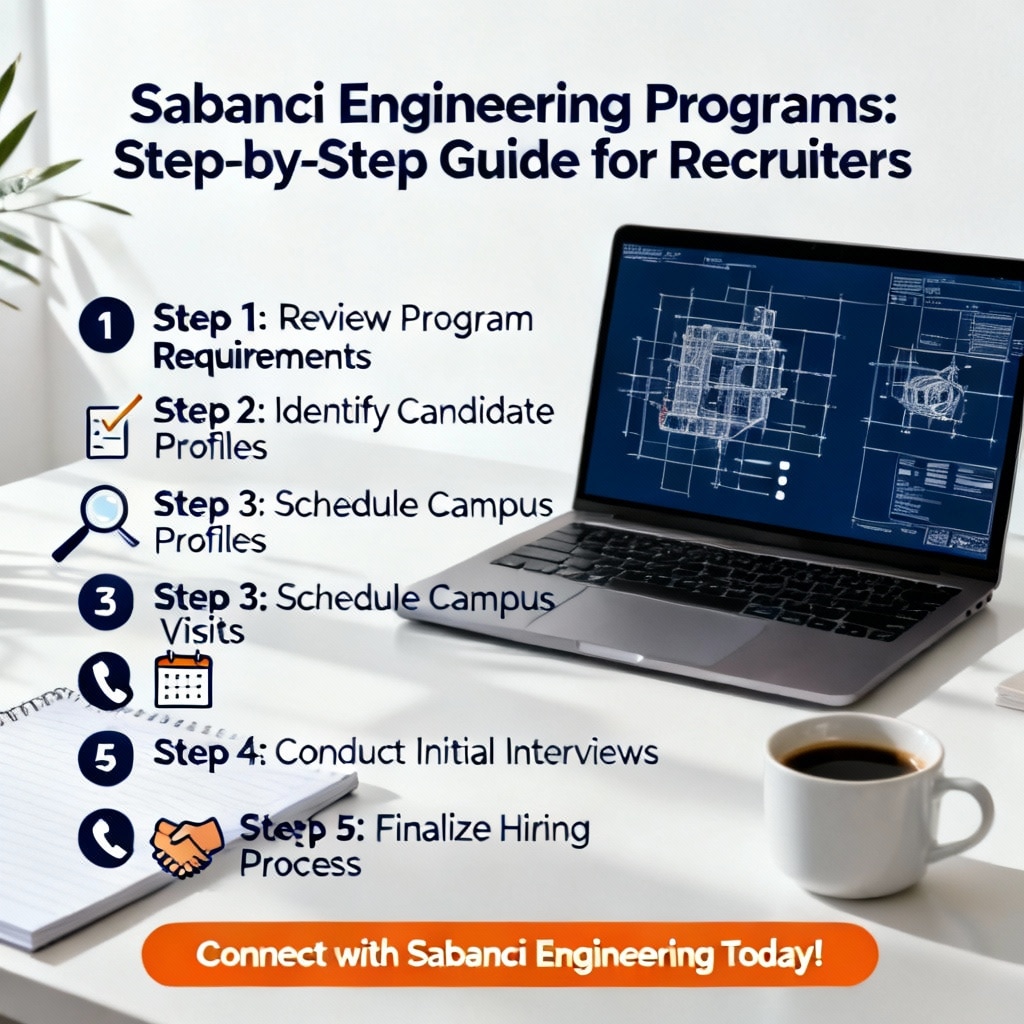
Sabancı University engineering programs step by step — A practical guide for international recruiters and admissions teams
On this page
- Sabancı University engineering programs step by step
- Explore engineering degree options
- Understand the general admission process
- Foundational studies and major selection
- Declaring a major: process and strategy
- Engineering curriculum and hands-on learning
- Graduation outcomes and career pathways
- What makes the approach attractive
- Practical recruitment workflows
- Recruiter checklist
- Collaborations and pathway opportunities
- How Study in Turkiye supports recruitment
- Messaging and positioning tips
- Key features summary
- Read more
- FAQ
- Call to action
Sabancı University engineering programs step by step
Sabancı University engineering programs step by step: this guide breaks down how international applicants gain entry, progress through foundational studies, choose a major, and prepare for careers — all within Sabancı University’s flexible, multidisciplinary model. Designed for international student recruiters, university admissions teams, HR and marketing professionals, and placement agencies, this post outlines actionable steps and recruitment tactics you can use to support candidates, while highlighting how Study in Turkiye’s recruitment and admissions expertise streamlines the process.
Step 1 — Explore engineering degree options
Sabancı University’s Faculty of Engineering and Natural Sciences (FENS) offers a modern engineering education model where students build a shared foundation and select a specialization when ready.
- Computer Science and Engineering
Focus: software, AI, systems design. English-taught.
- Electronics Engineering
Focus: circuits, embedded systems, communications.
- Industrial Engineering
Focus: operations research, systems optimization, manufacturing.
- Materials Science and Nano Engineering
Focus: advanced materials, testing, nano-scale engineering.
- Mechatronics Engineering
Focus: robotics, control systems, multidisciplinary projects.
- Energy Technologies and Management (Graduate)
Focus: energy systems, policy, and technology management.
Why it matters to recruiters
Sabancı’s portfolio is broad enough to attract diverse candidates — from those targeting software and AI to students interested in materials or energy systems.
Action items
- Review program pages and syllabi on Sabancı University’s profile to map candidate interests to program fit: Sabancı University.
- Prepare program-specific selling points (lab facilities, research centres, English instruction, industry ties).
Step 2 — Understand the general admission process
Typical international admission requirements
- Academic transcripts and diploma equivalents
- Proof of English proficiency (programs are taught in English)
- Standardized test scores where relevant (SAT/ACT or equivalent)
- Country-specific documentation and eligibility requirements
Practical checklist for agents and admissions teams
- Verify document translation and notarization requirements for each applicant’s country.
- Confirm acceptable English tests and minimum scores for the target intake.
- Prepare a submission timeline that aligns with Sabancı University application deadlines.
Recruiter tip: Use a standardized intake form to capture common admissions information (transcripts, language scores, passport copy, timeline) so you can batch-process applications.
Step 3 — Foundational studies and when students choose a major
Sabancı’s model: all engineering undergraduates start with foundational courses (mathematics, natural sciences, computing, basic engineering principles). Students typically select their major after the first or second academic year once they have exposure to different fields.
Why this is attractive
- Reduces the risk of early specialization mistakes.
- Encourages interdisciplinary mobility and double majors or minors.
For recruiters and counsellors
- Advise candidates on the benefits of the flexible model: it can be especially appealing to international students who are still exploring career paths.
- Help prospective students build a Plan A/Plan B preference list of majors to reflect both passion and employability.
Step 4 — Declaring a major: process and strategy
The declaration process is student-driven; decisions are based on academic performance, interests, and faculty guidance.
Strategic advice for supporters
- Track student grades and course engagement during the foundational period to provide timely advising.
- Encourage internships, research projects, or summer courses that demonstrate aptitude in the intended specialization.
- Highlight Sabancı’s research centres and lab opportunities as differentiators when advising candidates.
Step 5 — Engineering curriculum, specialization and hands-on learning
Curriculum highlights
- Balanced theoretical and practical components.
- Courses that bridge fundamentals to applied areas: systems engineering, manufacturing, operations research, electronics, computer science, materials science, and energy technologies.
- Emphasis on project-based learning, labs, and internships.
How admissions and recruitment teams can showcase these elements
- Prepare candidate-specific narratives that combine coursework, lab exposure, and career outcomes.
- Arrange interviews or Q&A with Sabancı alumni or faculty when possible.
- Use case studies of student projects to demonstrate applied learning (e.g., robotics from Mechatronics, materials testing from Nano Engineering).
Step 6 — Graduation outcomes and career pathways
Typical graduate destinations
- Roles in national and international companies as engineers, managers, or consultants
- Research institutions or continuation to graduate studies
- Entrepreneurial ventures and technology start-ups
Messaging for employers and internship partners
Present Sabancı graduates as adaptable, multidisciplinary professionals with strong English skills and practical training.
For placement agencies
Develop partnerships with industry recruiters in IT, manufacturing, energy, healthcare, and consulting to create pipelines for final-year project students and interns.
What makes Sabancı University’s engineering approach attractive to international stakeholders
- Major flexibility: Students sample multiple disciplines before committing — a strong selling point for parents and students who value options.
- English instruction: Programs taught in English facilitate international mobility and employability.
- Research and innovation culture: Students can participate in faculty research and applied projects.
- Scholarships and funding: Robust scholarship options reduce financial barriers for high-potential international students.
Program and source information: Sabancı University.
Practical recruitment workflows and automation recommendations for education teams
Pre-application: marketing and lead capture
- Use targeted content that speaks to the flexible-major model and English instruction to attract candidates.
- Capture leads through program-specific landing pages, webinars featuring Sabancı faculty/alumni, and digital ads focused on program outcomes.
Application processing: automation and quality control
- Centralized CRM intake for document uploads and status tracking
- Automated reminders for missing documents and test deadlines
- Template-driven document checks for each country’s specific requirements
Offer management and onboarding
- Automate offer letters, scholarship confirmations, housing information, and orientation schedules.
- Provide checklists and local support services (visa guidance, pre-departure briefings, accommodation options).
Study in Turkiye supports international teams by streamlining recruitment workflows, tracking candidate pipelines, and maintaining compliance with university-specific criteria.
A checklist recruiters and admissions teams can use right now
Candidate profile checklist
- Academic transcripts (secondary school or equivalent)
- English proficiency proof
- Standardized test scores (if applicable)
- Statement of purpose highlighting interest areas
- CV or list of extracurriculars and projects
Timeline checklist
- 6–12 months before intake: outreach and lead capture
- 4–6 months before intake: complete application documents and submit
- 1–3 months before intake: visa processing and pre-departure orientation
Scholarship and funding checklist
- Identify eligibility criteria and deadlines
- Prepare supporting documents (recommendation letters, portfolios)
Engagement checklist
- Schedule alumni or faculty Q&A sessions
- Facilitate internships or research attachments where possible
Collaborations, articulation agreements and pathway opportunities
For institutions and agencies considering pathway programs or articulation, Sabancı’s flexible entry model is conducive to pathway programmes where students complete foundational semesters and transfer into Sabancı’s major selection process.
Study in Turkiye can help structure pathway agreements and manage international student transitions.
Relevant partner universities to consider
Note: When promoting medical or health-related pathways, prioritize universities within your institutional network and align with Study in Turkiye’s partner list.
How Study in Turkiye supports international recruitment and admissions automation
Recruitment leadership
Study in Turkiye provides a centralized platform and marketplace to present Sabancı programs to global candidates. Our content and lead-generation campaigns are optimized for international student intent (English-language content, program-specific landing pages).
Admissions automation
Automated document management, applicant tracking, and status notifications reduce manual processing time. Reporting dashboards provide live visibility into conversion rates by market, program, and recruitment partner.
Partner enablement
- Training and resources for agency partners, including step-by-step admissions workflows and compliance checklists.
- Co-branded campaigns and webinar support to amplify program visibility.
Value proposition for HR and marketing teams
Save time on manual processing, increase conversion through timely follow-up, and scale outreach using targeted recruitment capabilities offered by Study in Turkiye.
Messaging and positioning tips for recruiters and marketing teams
Position Sabancı University as:
- A flexible, English-taught engineering education that supports exploration and specialization.
- An institution that combines research strengths with practical, hands-on training.
- A globally oriented campus attractive to international employers.
Sample marketing hooks
- “Choose your engineering major after exploring the fundamentals at Sabancı University.”
- “English-taught engineering degrees with strong research and internship pathways.”
- “Scholarship-supported international intake and career-ready curricula.”
Key features summary (at-a-glance)
- Major flexibility: choose after first or second year
- English instruction across engineering programs
- Interdisciplinary and research-oriented curriculum
- Strong scholarship and funding opportunities
- Practical training: labs, projects, internships
- Source and program information: Sabancı University
FAQ
What are the main English proficiency requirements for Sabancı University?
Programs are taught in English. Acceptable tests and minimum scores vary by program and intake — confirm current requirements on Sabancı University’s admissions page and with Study in Turkiye guidance.
When do students choose their major?
Students normally decide after the first or second academic year, following foundational coursework and academic advising.
How can recruiters speed up application processing?
Adopt centralized intake forms, standardize document checklists by country, and use automated reminders and status updates managed via your CRM and Study in Turkiye partnership processes.
Take the Next Step with Study in Turkiye
Partner with Study in Turkiye to streamline recruitment, automate admissions workflows, and scale international outreach for Sabancı University and other partner institutions. Contact our partnerships team to discuss co-branded campaigns, agent onboarding, or tailored recruitment solutions.
Conclusion
Sabancı University engineering programs step by step — the institution’s flexible model, English instruction, and research-led curriculum make it an attractive option for diverse international candidates. For recruiters, admissions teams, HR and marketing professionals, and placement agencies, the keys to success are structured pre-application guidance, automated application workflows, early engagement with faculty/alumni, and clear messaging on employability and scholarships.
Partner with Study in Turkiye to streamline recruitment, manage admissions workflows, and build a pipeline of qualified, well-prepared international students.